Spring Onion Pesto Focaccia Toast
Spring onion pesto focaccia toast was the bite that stopped a room full of people mid-conversation at a micro wedding reception in Newport last April. Twenty guests, a private home on the water, and about a hundred of these toasts moving through the crowd on slate boards. Within ten minutes, three people had pulled me aside asking for the recipe. That is the kind of moment that tells you something is worth filing away. This spring onion pesto focaccia toast has been in my regular rotation ever since, for events, for Sunday dinners, and for any occasion where I need something that looks effortless and tastes like you spent the whole morning on it.
Some links in this post are affiliate links. If you buy through them, I may earn a small commission at no cost to you. I only recommend gear I actually use in my private chef kitchen.
A Newport Spring and the Micro Wedding That Started It All
It was mid-April in Rhode Island, which means the weather can go either direction. That particular Saturday it cooperated. The ceremony was small by design. The couple had chosen a private home just off Ocean Drive with a terrace that looked straight out over the Atlantic, and they wanted the food to feel like a really well-thrown house party rather than a formal event. No plated courses, no white-gloved servers standing at attention. Just beautiful food, cold wine, and a room that felt genuinely comfortable.
I had picked up spring onions at the farmers market in Middletown two days before the event. It was the first week they had appeared for the season and they were exactly right. Slender, with those dark green tops that still had some life in them and a mild sweetness that mature onions never quite have. I had been thinking about a pesto that used them as the primary green rather than basil. Basil was weeks away. Spring onions made sense for April.
The rest of the idea came together the way most good bites do. I already had focaccia from a bakery in Providence that I use regularly. I had goat cheese in the cooler because I almost always do in spring. The idea of whipping the goat cheese with a little lemon and olive oil, spreading it over a crisp slice of toast, and then layering the bright green pesto on top felt right before I even made a test version. Sometimes you just know. The honey and the flaky salt at the end were instinct, and they are exactly what the bite needed to hit every note at once.
From Farmers Market to Onion Pesto Focaccia Toast
For the event itself I toasted the focaccia slices hours in advance, rested them on wire racks so they stayed crisp from all sides, and assembled everything in the last ten minutes before we started passing them. Twenty guests, about a hundred pieces, and they were gone in under twenty minutes. The couple now requests this at every event we work together, and they have brought me back four times since that wedding. That is the thing about a bite that works. It becomes part of the story.
If you want to see how I approach full-course private events, this post on the Partum Events blog walks through what a micro wedding menu looks like from start to finish. The philosophy there is the same one I bring to every recipe on this site. Every element has to earn its place.
How to Build Spring Onion Pesto That Actually Tastes Like Spring
In general, most pesto follows the same path. Basil, pine nuts, Parmesan, garlic, olive oil, lemon. That formula is excellent in July. In April, when basil is nowhere near ready, spring onions do something different and honestly better for this application. They bring a gentle allium note that is bright without being sharp, and when you blanch them first the color locks in so vividly that the pesto looks almost painted.
First, the blanching step is sixty seconds, no longer. You are not cooking the onions, you are setting the color and knocking the raw edge off just enough. Pull them straight into an ice bath when the sixty seconds are up. This matters. If you skip the ice bath the heat keeps working and you lose that vivid green. The same logic applies to any herb-based sauce where color is part of the appeal. You want to stop the process cleanly.
Blend the Onion Pesto
From there the onion pesto comes together in a food processor. Spring onions, toasted pine nuts, a clove of garlic, Parmesan, the juice and zest of one lemon, salt, and enough olive oil to bring it to a spreadable consistency. The lemon zest is not optional. It does something to the overall brightness of the sauce that the juice alone cannot replicate. When I make this in bigger batches for events I sometimes add a handful of baby spinach or arugula to extend the color and add a slight peppery note without changing the character too much. For this home version I keep it pure.
💡 Char the Onions Too: Charring the onions concentrates their sweetness and adds depth that raw or blanched onions cannot replicate. The blackened edges are flavor, not mistakes.
Ideally, the onion pesto focaccia toast filling should land somewhere between a chunky paste and a smooth spread. Not completely blended, not rough. You want it to sit on top of the goat cheese without sliding off when someone picks up the toast. Pulse more than blend. Check the texture every few pulses until you have something with a little body to it.
💡 Pulse, Don’t Blend: Pulse the pesto, don’t blend continuously. You want texture left in it. A completely smooth paste loses the body it needs to hold on the toast.
Toast the Pine Nuts
Additionally, one other note on the pine nuts. Toast them yourself in a dry pan over medium heat, stirring constantly, until they are golden and fragrant. Bag toasted are never quite the same. The toasting wakes up the oils in the nut and gives the pesto a depth that raw pine nuts do not have. It takes about four minutes and it makes a real difference.
The Onion Pesto Focaccia Toast Method and Why the Wire Rack Matters
However, focaccia is wonderful bread and a challenging one for toasting — the right onion pesto focaccia toast starts with the right slice. It has more moisture than a standard sandwich loaf and the open crumb can become chewy instead of crisp if you toast it wrong. The goal here is a piece that has a genuine snap when you bite through it but does not crumble into pieces when someone picks it up from a platter.
💡 Char the Edges: The edges should have some char on them. That bitterness is what balances the richness of the goat cheese. A pale, soft toast will not hold up.
Then, start with half-inch slices. Thinner than that and the toast becomes fragile. Thicker and you lose the snap, especially in the center. I use a heavy stainless skillet or a broiler depending on how many pieces I am making. For four to six pieces at home, a heavy stainless skillet is better. You get direct even heat on the cut face and a more controlled process. For large batches at events I use the broiler with slices on a sheet pan.
The Stainless Skillet Toast Method
For the stainless skillet method: heat the pan dry over medium-high until it is properly hot, which takes about two minutes. Brush one side of each slice lightly with olive oil and place oil-side down. Do not move them. Four to five minutes, check the color, and when they are deep golden with some char on the edges, flip for thirty seconds just to warm the second side. The goal is a toast that is browned on one side and slightly dried through without burning the bottom.
Why the Wire Rack Matters
Here is the part most people skip: transfer to a wire rack immediately. If you put the toast on a plate or a flat surface, the steam that is still releasing from the bread has nowhere to go and the bottom softens within minutes. The wire rack lets air circulate on all sides and holds the crispness. I toast focaccia for events up to three hours in advance and keep it on racks at room temperature. It holds beautifully. This is a genuine prep-ahead advantage for parties and entertaining.
One thing to check before you buy your focaccia. Look for a bakery-style loaf with a good olive oil content and a relatively uniform crumb. The overly airy, giant-bubble focaccia that is more about showmanship than structure is not great for this application. You want something substantial enough to hold the toppings without sagging.
Assembly and the Order That Makes This Spring Onion Pesto Focaccia Toast Work
Importantly, the order of assembly for this onion pesto focaccia toast is not arbitrary. Each layer does a specific job and they have to go on in the right sequence or the whole thing falls apart, sometimes literally.
💡 Build in Order: Build the layers in order. Goat cheese first, then pesto, then greens. If you add the greens before the pesto sets, they slide off.
To begin, start with the toast. It needs to be at room temperature, not hot. If it is still warm when you spread the goat cheese, the cheese will melt slightly and lose its structure. Let the toasts cool on the rack for at least ten minutes before assembling.
💡 Room Temperature Cream Cheese: Room temperature cream cheese makes a real difference. Cold cream cheese stays lumpy no matter how long you beat it. Pull it out early.
Layer the Whipped Goat Cheese
First, the whipped goat cheese goes on first and it goes on generously. Whip the goat cheese with a tablespoon of olive oil, the zest of half a lemon, a pinch of salt, and a tablespoon of heavy cream or labneh if you have it. The whipping process, either by hand or with a hand mixer on low, transforms the texture from crumbly to silky. Spread it in an even layer that goes almost to the edge of the toast. This layer does double duty. It provides richness and it acts as an adhesive for everything that follows.
Spread the Onion Pesto
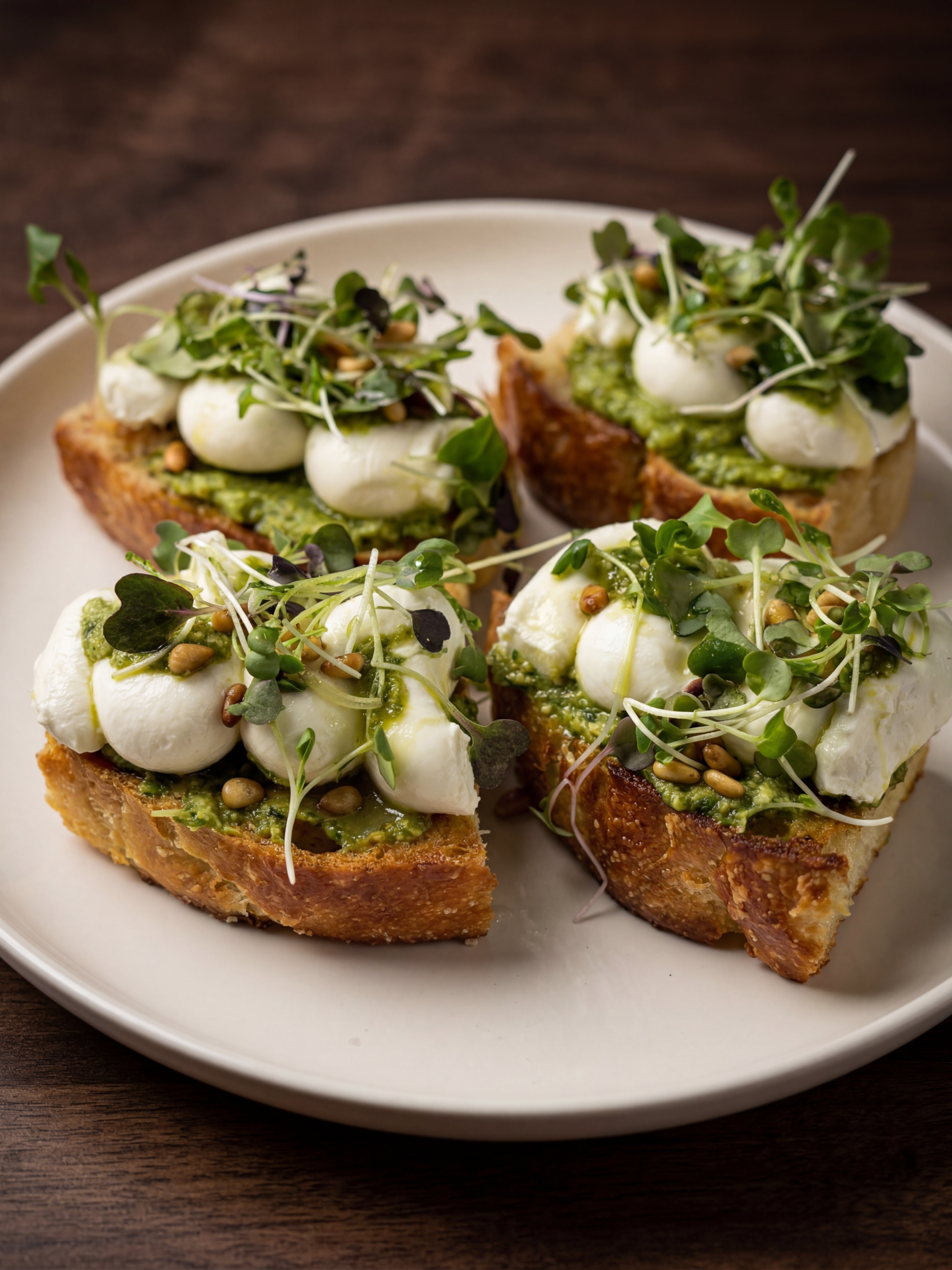
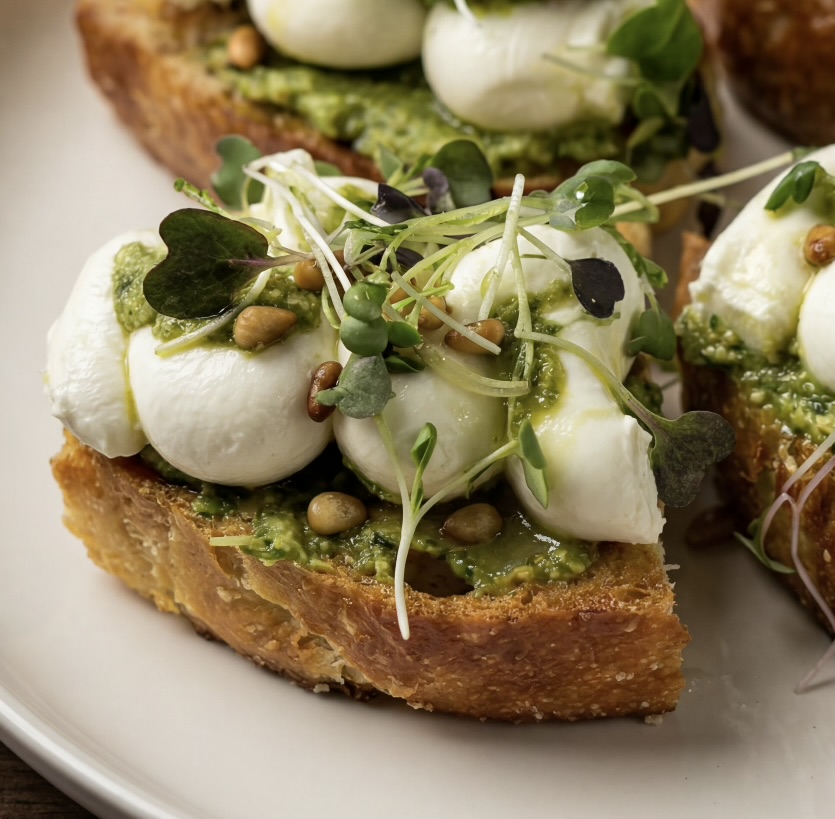
Then, pesto goes on next, spooned over the goat cheese and spread gently. Do not press hard or the goat cheese layer will move. The contrast of the white and the green against the golden toast is one of the most visually satisfying things about this bite. It looks like something you would see on a menu in Amalfi.
Finish with Microgreens and Pine Nuts
Next, microgreens sit on top of the pesto. A small, loose mound. Pea shoots, radish greens, or a mixed variety all work well here. They add height, a mild grassy flavor, and texture contrast against the creamy layers below.
Then the finishing layer: a few toasted pine nuts scattered over the top, a light drizzle of good honey across the whole surface, a pinch of flaky sea salt, and finally a very light drizzle of your best olive oil. The honey and the flaky salt are the moment the whole bite becomes something. The sweetness plays against the tang of the goat cheese and the brightness of the pesto, and the salt crunch gives each bite a textural note that keeps it from feeling heavy.
Serve the Onion Pesto Focaccia Toast Immediately
Finally, serve within fifteen minutes of assembly. The toast will hold its crispness but the moisture from the pesto and the goat cheese will eventually start to soften the surface. Fifteen minutes is your window for the ideal texture. For events I do a rolling assembly, building batches of ten to twelve pieces every twelve minutes or so.
Chef’s Notes
Plating: For a dinner party appetizer, arrange on a round plate or long wooden board. Keep them whole for a seated course so the layers stay stacked high, or cut diagonally into two pieces for passing. For passed apps at an event, keep them whole on a small round board or tray. The visual stack of green, white, and gold does the work. Do not over-garnish. A few extra microgreens and a light drizzle of oil on the board itself is all you need. Let the toast be the thing.
Wine pairing: Vermentino from Sardinia is my first call here. It has the minerality and citrus lift that mirrors the lemon in the pesto, and the slight almond note in the grape complements the pine nuts. Sancerre or Pouilly-Fumé is an excellent alternative. New Zealand Sauvignon Blanc from Marlborough works well if you want something more accessible. The consistent thread is high acidity and no oak. Oak and goat cheese fight each other. Stay in the crisp white lane and this bite will shine.
Make-Ahead Tips for Onion Pesto Focaccia Toast
Underneath the pesto on onion pesto focaccia toast is a layer of whipped goat cheese. Prep ahead: This is one of the most prep-friendly appetizers I make. The pesto can be made the day before and stored in an airtight container with a thin layer of olive oil pressed against the surface to prevent oxidation. The whipped goat cheese can be made the morning of and kept covered in the refrigerator. The toast can be done two to three hours in advance and held on a wire rack at room temperature. Day of assembly takes ten minutes. That is the kind of math that makes event cooking sane.
Feeding more people: This recipe makes eight to ten toasts, enough for four people as an appetizer. For a party of twelve to sixteen, triple the pesto batch and plan on twenty-five to thirty toasts. The pesto and goat cheese scale without any adjustments. The focaccia math is straightforward. One standard bakery loaf gives you approximately sixteen to twenty half-inch slices depending on the size of the loaf. Buy two loaves if you are feeding more than eight and you will have plenty.
Spring Onion Pesto Focaccia Toast Swaps and Variations
Swaps: No spring onions at the market? Young scallions are the closest substitute and work nearly identically. Green garlic, which shows up at the same time of year, adds a more assertive flavor but is excellent in this application. For a nut-free version, replace the pine nuts with sunflower seeds or pumpkin seeds, toasted the same way. The pesto changes slightly in character but is still very good. Dairy-free? Whipped cashew cream with lemon zest stands in for the goat cheese reasonably well, though the tang is different. For a more herbaceous pesto, add a handful of fresh basil or flat-leaf parsley to the food processor alongside the spring onions.
This spring onion pesto focaccia toast is the kind of recipe that makes people think you have a secret. The secret is just good technique and ingredients that are in season at the same time. If you like this approach to seasonal appetizers built around one hero ingredient, take a look at the butternut squash ricotta ravioli, which uses the same philosophy in a pasta format, or the duck breast cherry port wine reduction for a main course that has the same balance of elegance and approachability. For something that looks dramatic on a plated dinner, the filet mignon apple brandy glaze is a consistent crowd stopper. All of these were developed for the same kinds of private events where this focaccia toast got its start.
Spring Onion Pesto Focaccia Toast
Ingredients
Equipment
Method
- Heat a heavy stainless steel skillet dry over medium-high until it is properly hot, about 2 minutes. Brush one side of each focaccia slice lightly with olive oil.
- Place focaccia oil-side down in the dry skillet. Do not move it. Toast 4 to 5 minutes until deep golden with some char on the edges, then flip and warm the second side 30 seconds.
- The edges should have some char on them. That bitterness is what balances the richness of the goat cheese. A pale, soft toast will sag under the toppings and disappear into the bite.
- Transfer immediately to a wire rack — not a plate — so the steam still releasing from the bread escapes. A flat surface traps it and the bottom softens within minutes. Finish with a pinch of flaky sea salt.
- Heat a dry stainless pan over high heat. Char the spring onions until blackened in spots, about 3 to 4 minutes per side. Let cool slightly, then trim any heavily charred outer layers.
- Add charred spring onions, pine nuts, Parmigiano, garlic, and lemon juice to a blender or food processor. Pulse to combine.
- Stream in olive oil while blending until a pesto consistency forms. Season with salt and pepper.
- Beat goat cheese and cream cheese together on medium speed until smooth, about 2 minutes.
- Add heavy cream and beat until light and fluffy. Season with salt and a pinch of white pepper.
- Toss spring greens with lemon juice, olive oil, and a small pinch of salt just before assembling.
- Spread a generous layer of whipped goat cheese on each toasted focaccia slice.
- Spoon spring onion pesto over the cheese. Top with dressed spring greens, radish slices, and a pinch of microgreens.
- Serve immediately while the focaccia is still warm and crisp.
Notes
Filed Under: Equipment
Shop This Recipe

Cuisinart 14-Cup Food Processor
Check Price →

Misen 5-Ply Stainless Steel Pan
Check Price →

Cutco 1738 Gourmet Prep Knife
Check Price →
As an Amazon Associate I earn from qualifying purchases.
Dinner Party Dossier
Planning the whole dinner?
The Dossier is three complete multi-course menus from private chef events, built around what actually worked at the table. Shopping lists, prep timelines, plating notes, every component per course.
Open the Dossier — $27Did You Make This?
Rate this recipe.
If this recipe made it to your table, tap a star. It helps other home cooks find it.
Classified Access
Get the recipes before they’re public.
New case files. Chef’s notes. The stuff I don’t post anywhere else. Delivered weekly.