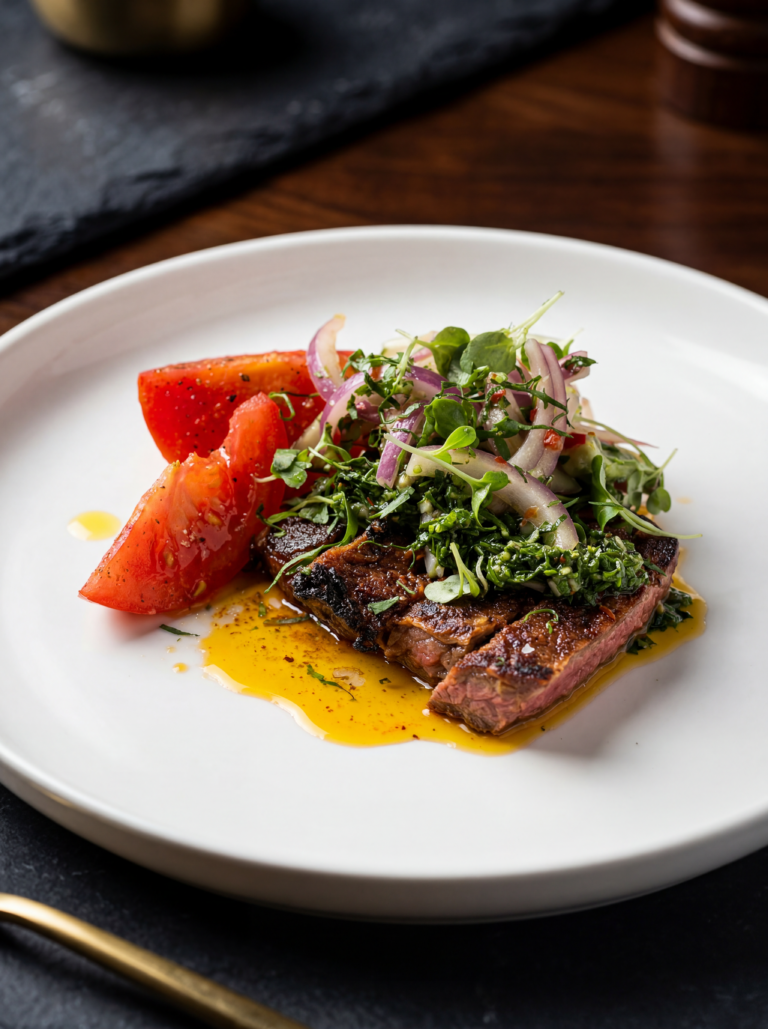
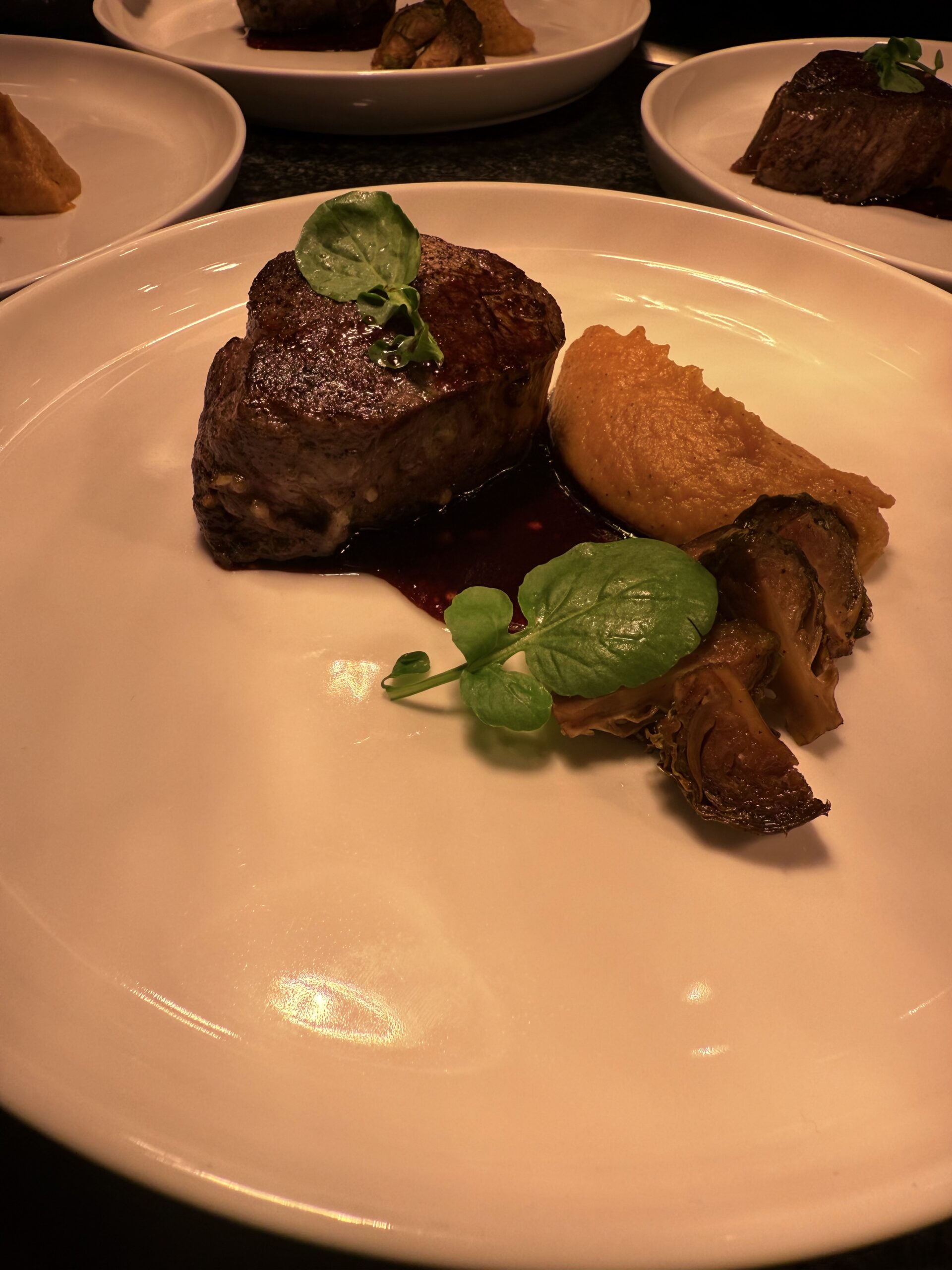
Filet Mignon with Apple Brandy Glaze, Sweet Potato Purée, and Roasted Brussels Sprouts
This filet mignon apple brandy glaze recipe started as the answer to a very specific question. A client in Newport was hosting her October dinner party for the eighth year in a row. Eight guests, long dining table overlooking the water, and the ask was something she had never said before: step it up. She did not want the same roasted chicken. She wanted something that would make people ask what restaurant she had hired out. The answer was this plate, and it came together on a Thursday evening through Partum Events, the private chef and event company I run here in Newport. It has been on my fall rotation ever since.
Some links in this post are affiliate links. If you buy through them, I may earn a small commission at no cost to you. I only recommend gear I actually use in my private chef kitchen.
The combination on the plate sounds like a lot. Filet mignon, an apple and brandy glaze built on veal demi-glace, a silky sweet potato purée, and roasted Brussels sprouts. But when each component is done correctly, the plate makes sense. The bitter caramelized sprouts balance the sweetness in the glaze. The purée is rich enough to anchor everything without competing with the beef. And the filet, seared hard and rested properly, is the kind of protein that earns every bite.
Why Cooking Filet Mignon at Home Is Not as Scary as It Sounds
The intimidation around filet mignon is mostly about the price. You spend more on this cut than almost anything else at the butcher counter, and the fear of ruining it creates a kind of pressure that gets in the way of actually cooking it well. Here is the truth: filet mignon is one of the most forgiving premium cuts you can work with, precisely because it is so tender. There is very little connective tissue. It does not need to be broken down over long cooking. What it needs is a good sear, proper resting time, and a sauce that respects what it is.
Buy center-cut beef tenderloin filets, six to seven ounces each, cut at one and a half inches thick. Anything thinner and you lose the gradient from the crust to the medium-rare center that makes the whole thing worth eating. Anything less than center-cut and the shape becomes irregular, which means uneven cooking. Ask your butcher to tie them if the filets are not already shaped into uniform rounds. This is not fussiness. It is just giving yourself the best possible result across multiple steaks at the same time.
How to Sear a Filet Mignon
The filet mignon brandy glaze approach starts before the pan ever gets hot. Pull the steaks from the refrigerator at least thirty minutes before cooking. Cold protein goes into a hot pan and cooks unevenly. Pat them completely dry with paper towels. Not mostly dry. Completely dry. Surface moisture turns to steam in the pan, and steam is the enemy of a proper crust. Season generously with kosher salt and freshly cracked black pepper on all sides, including the edges.
Getting the Pan Ripping Hot
Get a heavy stainless skillet ripping hot. When you flick a drop of water into the pan and it disappears instantly, you are ready. Add a neutral oil with a high smoke point. Grapeseed, avocado, or refined vegetable oil — not olive oil, and definitely not butter yet. Set the filets in the pan and do not move them. Three to four minutes per side for medium-rare, depending on thickness. Resist the urge to press down or check underneath every thirty seconds. Trust the heat and let the crust build.
💡 Don’t Move the Filet: Resist the urge to move or check the filet. A proper crust only forms from sustained contact with the pan. If it sticks, it is not ready to flip.
Basting with Butter, Garlic, and Thyme
When you flip, reduce the heat slightly. Add four tablespoons of unsalted butter, four smashed garlic cloves, and eight sprigs of fresh thyme to the pan. As the butter foams, tilt the pan and spoon the hot butter continuously over the top of each steak. This is basting, and it is the step that separates home cooking from restaurant cooking. Keep basting for a minute or two. The butter picks up the garlic and thyme and carries that flavor directly into the crust. Pull the steaks at 125°F internal, rest on a wire rack for eight to ten full minutes so carryover finishes the cook. Do not skip the rest. The juices need time to redistribute or they all run onto the cutting board the moment you slice.
💡 Cold Butter, One at a Time: Adding butter cold and one tablespoon at a time creates a stable emulsion. If you dump in warm butter all at once the fat breaks and you lose the glossy texture.
Building the Filet Mignon Apple Brandy Glaze
The filet mignon brandy glaze is built on classic Normandy sear-and-sauce technique. This is where the dish gets its personality. Filet mignon apple brandy glaze draws from a classic Normandy technique. Normandy, the northwestern French region, is famous for apples, cream, and Calvados — a French apple brandy distilled from fermented cider. Pairing apple with beef is not obvious to everyone, but once you taste it, the logic clicks. Apple cuts through the richness of the beef while brandy adds warmth and depth. Meanwhile the demi-glace ties it all together into something that reads like a restaurant sauce but is actually very straightforward to make.
Starting the Glaze with Shallot and Apple
This is the saucepot phase of the filet mignon brandy glaze. Start with a teaspoon of unsalted butter in the same skillet you used to sear (keep the fond — that’s where the flavor lives). Set over medium heat. Add a finely minced shallot and cook until translucent, about three minutes. Add one Honeycrisp or Fuji apple, peeled, cored, and cut into a small dice. Let it soften for two to three minutes. You want it to have a little give but not collapse entirely. Small pieces of tender apple in the finished sauce give it a texture and quality that a smooth reduction cannot replicate.
Finishing the Glaze with Brandy and Demi-Glace
Brandy carries this sauce. Add it straight to the hot pan and stand back a little. If you can find Calvados, use it — the apple flavor deepens in a way that regular brandy or cognac cannot quite match. Let the brandy flame off and reduce by half, about a minute, then add one and a third cups of veal demi-glace or rich beef stock. If you are using stock, reduce it by half first so the apple brandy glaze reaches the right consistency without dragging on.
Simmer until the apple brandy glaze is glossy and coats the back of a spoon. Finish with a teaspoon of fresh thyme leaves, a teaspoon of Dijon mustard, salt, and black pepper. The Dijon disappears into the final sauce. You will not taste it as mustard. It rounds the connection between the apple, the beef flavor, and the brandy, and it is the reason the sauce tastes finished.
💡 Let the Brandy Flame: If the brandy flames, do not panic. Let it burn off naturally. It goes out on its own in seconds and the alcohol cooks off completely.
Sweet Potato Purée That Actually Holds Up on the Plate
The difference between a good sweet potato purée and a great one comes down to technique. Specifically, it is about removing as much water as possible before you blend. Water is the enemy of a smooth, rich purée. Skip this step and you end up with something closer to soup.
Peel four medium sweet potatoes, about six ounces each, and cut them into even pieces so they cook uniformly. Simmer in well-salted water until completely tender. Drain thoroughly, then return them to the warm pot over low heat for two to three minutes, stirring occasionally. This dries them out. Once they look slightly chalky and no steam is rising, they are ready to blend.
Transfer to a blender. Not a food processor and not a hand mixer. A blender produces a significantly smoother result because of how the blades work at high speed. Add six tablespoons of cold cubed unsalted butter in stages, warm heavy cream a few tablespoons at a time until you reach the consistency you want, a teaspoon of brown sugar, and a pinch of nutmeg. Blend on high until completely smooth. Season with salt and white pepper. White pepper rather than black because the specks do not show in a smooth purée and the flavor is cleaner.
For dinner party service, hold the purée in a bowl set over barely simmering water with a sheet of plastic wrap pressed directly onto the surface. It stays silky and warm for up to an hour without skinning over or losing its texture. This is one of the most useful prep-ahead moves in dinner party cooking.
Roasted Brussels Sprouts for the Filet Mignon Apple Brandy Glaze Plate
Brussels sprouts need high heat and space. That is it. Preheat your oven to 425°F. Halve the sprouts through the stem end so you get a flat cut surface to put against the pan. Toss them generously in olive oil, salt, and freshly cracked black pepper, and lay them cut side down on a sheet pan in a single layer. Do not crowd them. Crowding traps steam and prevents caramelization. Use two sheet pans if you need to. One crowded pan is worse than two properly spread pans.
Roast for twelve to fifteen minutes. Check at twelve. You are looking for deeply golden color on the cut surface and outer leaves that are just starting to go crispy at the edges. The bitterness that develops with that level of caramelization is exactly what this plate needs. It is the counterpoint to the sweetness in the purée and the glaze, and it keeps the dish from tipping too rich. Pull them when they are right, season one more time out of the oven, and serve as soon as possible. They hold reasonably well but are best within ten minutes of coming out.
💡 Room Temperature First: Bringing the meat to room temperature is not just a chef habit. It means the center reaches temperature at the same rate as the outside, so you get an even cook all the way through.
How to Plate Filet Mignon with Apple Brandy Glaze
Plating this dish is straightforward once you understand the logic. Everything on the plate has a relationship to everything else, and how you arrange it reflects that.
Start with the sweet potato purée. For a formal dinner, use two large spoons to form a quenelle, that three-sided oval shape you see at restaurant tables. For something more relaxed, use the back of a large spoon to create a swoosh from one side of the plate to the other. The purée goes down first because everything else rests on or beside it.
Set the filet on top of or just overlapping the purée. If you sliced it, fan the pieces at a slight angle so the interior gradient shows. Place the Brussels sprouts alongside with the cut side facing up so the caramelization is visible. Spoon the apple brandy glaze over the meat in a slow ribbon, not pooled. Finish with a few watercress leaves on top of the filet. Nothing more. The components speak for themselves when they have been cooked with attention.
Chef’s Notes
Plating: For more than four guests at a dinner party, plate as close to service as possible. The purée loses temperature fastest. If you are running service for eight or more, pre-plate the purée, tent the plates loosely with foil, and add the filet, Brussels sprouts, and glaze at the pass just before serving.
Wine: The apple brandy glaze points you toward wines with some fruit character and moderate body. A Côtes du Rhône or a California Cabernet with restrained oak both work well. The fruit in those wines echoes the apple in the sauce without competing with it. Avoid anything heavily tannic, which will pull against the sweetness in the glaze.
Make-Ahead Tips for Filet Mignon Apple Brandy Glaze
Prep ahead: The sweet potato purée can be made a full day in advance. Reheat gently with a splash of warm cream to loosen it back to the right consistency. The apple brandy glaze keeps in the refrigerator for two days and reheats beautifully over low heat. Sear the filets to order, always. A pre-seared and rested steak does not hold.
Feeding more people: This recipe scales cleanly to eight guests by doubling every component. For twelve or more, sear the filets to build a crust and finish them in a 375°F oven for four to six minutes depending on thickness. This gives you much more control over timing when multiple steaks need to land at the same temperature simultaneously.
Swaps: Calvados is worth hunting down, but any good apple brandy works. If veal demi-glace is not available, reduce a quality beef stock by half before building the sauce and it will do most of the job. The Brussels sprouts can be swapped for asparagus or haricots verts in the spring. The logic of the plate stays exactly the same.
For more sear-and-sauce technique on the same level as this dish, the Duck Breast with Cherry Port Wine Sauce is the closest companion in these case files. Same approach, different protein, equally strong for a dinner party table. If you want something that can handle a bigger group without the last-minute intensity of a filet sear, the Mahi Mahi Coconut Curry is built for that kind of service and holds beautifully through a full dinner party evening.
Filet Mignon with Apple Brandy Glaze, Sweet Potato Purée, and Roasted Brussels Sprouts
Ingredients
Method
- Preheat your oven to 425°F. Trim and halve the Brussels sprouts, toss with olive oil, salt, and cracked black pepper. Spread cut-side down on a sheet pan and roast for 12 to 15 minutes until caramelized and tender at the edges. Set aside.
- Peel and cube the sweet potatoes into 1-inch pieces. Boil in salted water until fork-tender, about 15 to 18 minutes. Drain and return to the pot over low heat for 1 minute to steam off excess moisture. Transfer to a blender (not a food processor or hand mixer — a blender gives the silky, restaurant-style smooth).
- Over low heat, stir in the cold butter one tablespoon at a time until fully incorporated. Add the warm heavy cream a little at a time until the purée is silky and smooth. Stir in the brown sugar and nutmeg. Season with salt and white pepper.
- Pull the filets from the refrigerator 30 to 45 minutes before cooking. Pat completely dry with paper towels. Season generously with kosher salt and cracked black pepper on all sides.
- Heat a stainless or heavy skillet over high heat until smoking. Add the neutral oil. Sear the filets for 3 to 4 minutes per side without moving them.
- Reduce heat to medium, add the butter, garlic cloves, and thyme sprigs. Tilt the pan and baste the filets continuously for 1 to 2 minutes. For medium-rare, pull at 125°F internal. Remove from the pan and rest on a wire rack for 8 to 10 minutes so carryover finishes the cook without pushing past medium-rare.
- Discard excess fat from the pan but keep the fond. Reduce heat to medium. Add the butter and sauté the shallot for 2 to 3 minutes until softened. Add the diced apple and cook for another 2 minutes.
- Carefully add the brandy (it may flame briefly) and let it reduce by half, about 1 minute. Add the demi-glace or beef stock. Simmer for 6 to 8 minutes until the sauce thickens and coats a spoon.
- Stir in the thyme leaves and Dijon mustard. Taste and adjust salt and pepper.
- Quenelle the sweet potato purée to one side of each plate using two large spoons. Set the rested filet against the purée, seared crust facing the diner. Arrange the Brussels sprouts opposite the filet at 8 o’clock, cut-side up. Spoon the apple brandy glaze over the meat in a slow ribbon, not pooled. Finish with a few watercress leaves on top of the filet. Serve immediately.
Notes
Filed Under: Equipment
Shop This Recipe

Misen 5-Ply Stainless Steel Pan
Check Price →
ThermoWorks ThermoPop 2
Check Price →
Cutco 1738 Gourmet Prep Knife
Check Price →
All-Clad D3 Sauce Pan, 2 Qt
Check Price →As an Amazon Associate I earn from qualifying purchases.
Filed Under: Equipment
Shop This Recipe
Misen 5-Ply Stainless Steel Pan
Check Price →ThermoWorks ThermoPop 2
Check Price →Cutco 1738 Gourmet Prep Knife
Check Price →All-Clad D3 Sauce Pan, 2 Qt
Check Price →As an Amazon Associate I earn from qualifying purchases.
Dinner Party Dossier
Planning the whole dinner?
The Dossier is three complete multi-course menus from private chef events, built around what actually worked at the table. Shopping lists, prep timelines, plating notes, every component per course.
Open the Dossier — $27Did You Make This?
Rate this recipe.
If this recipe made it to your table, tap a star. It helps other home cooks find it.
Classified Access
Get the recipes before they’re public.
New case files. Chef’s notes. The stuff I don’t post anywhere else. Delivered weekly.