Bacon Wrapped Pork Tenderloin with Peach Bourbon Glaze and Roasted Garlic Potato Purée
Peach bourbon pork tenderloin was never something I planned to put on a menu. It happened the way most good recipes do. A client had fresh peaches from a farm stand off West Main Road in Middletown, a bottle of Woodford Reserve already open on the bar cart, and a pork tenderloin in the refrigerator that needed to become something worth sitting down for. One dinner service later, this became the most requested dish I have made in Newport. If you want something that looks like a restaurant produced it but comes together in under an hour, start here.
Some links in this post are affiliate links. If you buy through them, I may earn a small commission at no cost to you. I only recommend gear I actually use in my private chef kitchen.
Why Peach Bourbon Pork Tenderloin Belongs in the Dinner Rotation
Pork tenderloin is one of the most overlooked cuts in home cooking. It is cheaper than beef, cooks faster than bone-in chicken, and when you wrap it in applewood-smoked bacon and hit it with a glaze built from fresh peaches and real bourbon, it becomes something guests photograph before they eat it.
The pairing of peach and bourbon is not new. What makes this version work is the balance. Fresh peaches bring brightness and a natural acidity that cooked-down preserves cannot replicate. Bourbon adds smoke, warmth, and depth. Dijon mustard and apple cider vinegar keep the glaze from tipping sweet. A pinch of smoked paprika ties it all together and adds a faint earthiness that rounds the whole thing out.
What carries this dish across the line from good to memorable is what goes underneath. The roasted garlic potato purée is not mashed potatoes. Roasting the garlic low and slow until it caramelizes completely changes its character. It goes from sharp to sweet, almost nutty, and that quality carries through the purée in a way that makes people ask what you put in there. The answer is time, butter, and warm heavy cream.
Pork tenderloin also cooks to a safe internal temperature of 145°F, which leaves the center slightly pink and incredibly juicy. A lot of home cooks overcook pork out of habit. This recipe gives you a reliable method and a clear temperature target so you do not have to guess.
The Story Behind the Plate
Late July in Newport moves at a pace that does not leave a lot of room for indecision. August is right behind it, and you are suddenly in the busiest stretch of the summer season with clients who want dinner parties that feel effortless but still land as impressive. That pressure is where a lot of my best recipes come from.
The client for this dinner had spent the afternoon at a farm stand and came back with a pint of peaches that actually smelled like peaches. Not the hard imported ones you find in a grocery store in February. These were soft and golden with that faint pink blush, the kind that leave a stain on your fingers when you cut them. She set them on the counter when I arrived for prep and neither of us said anything about dessert.
The pork tenderloin was already resting on the cutting board. I had bourbon in the kit. I started building the glaze while I wrapped the tenderloin in thick-cut bacon, and by the time everything came out of the oven and rested on the board, the kitchen smelled like something important had happened.
Four people sat down to that dinner. Four clean plates came back to the kitchen.
That is the moment you know a dish has a future. When you want to make it again the next day. When the client follows up two weeks later asking if you remember what you put in that sauce.
I cook for events and private dinners throughout Newport through Partum Events. When the goal is to make people feel genuinely taken care of, not just fed well, you reach for the recipes that look impressive without punishing you for cooking them.
Why Wrap Peach Bourbon Pork Tenderloin in Bacon
There are two reasons to wrap a pork tenderloin in bacon and both of them matter.
The first is moisture. Pork tenderloin is a lean cut. It is forgiving in terms of cooking time, but lean muscle can dry out quickly when heat is applied without something working against it. Wrapping the tenderloin in bacon before it goes into the pan solves this before the problem starts. As the bacon renders in the oven, the fat bastes the tenderloin from the outside. By the time the internal temperature reaches 145°F, the center is still slightly pink and the texture is clean rather than chalky.
💡 Bacon Does Double Duty: The bacon does two things here: it bastes the meat as the fat renders and creates a crispy exterior that holds everything together during slicing.
The second reason is crust. When you sear the bacon-wrapped tenderloin in a heavy stainless skillet before the oven, the bacon tightens and crisps on all sides. It creates a shell that holds the tenderloin together through the roasting phase and gives each medallion that visible ring of crispy bacon all the way around when you slice it. This is not just about flavor. It is about what the plate looks like when it reaches the table.
Use thick-cut applewood-smoked bacon. Thin bacon does not give you the structure you need and it can tear when you sear it. Applewood smoke is cleaner and lighter than hickory, which means it cooperates with the peach glaze rather than competing with it. Wrap slightly overlapping, tuck the ends underneath, and secure with toothpicks if needed before searing.
Building the Peach Bourbon Glaze from Scratch
This is the part of peach bourbon pork tenderloin that turns heads. The glaze is the soul of this dish. It is what transforms a good bacon-wrapped pork tenderloin into a peach bourbon pork tenderloin that earns a reputation.
Start with fresh peaches when they are in season. I know people use preserves in variations of this recipe and the logic is practical, but fresh peaches in peak summer behave differently. They have water content and natural acidity that cooked-down preserves cannot replicate. They also hold their color better during cooking, so the glaze stays golden and bright rather than going dark and heavy.
Dice the peaches small, about a quarter inch. You want them to soften and partially break down over medium heat in about six to eight minutes, but you also want some texture to remain. This is a glaze, not a purée, and you want it to fall over the tenderloin with some body rather than running off the plate.
Reducing and Balancing the Peach Bourbon Glaze
For peach bourbon pork tenderloin the bourbon needs time to lose its sharpness. The bourbon goes in early. Some recipes add it at the end to preserve that sharp top note, but I cook it down from the start. The heat burns off the harsh edge and what remains is the caramel, vanilla, and oak that sit underneath every good bottle. Add the honey, the Dijon mustard, the apple cider vinegar, and the smoked paprika. Let it reduce until the glaze thickens slightly and clings to a spoon.
💡 Pull the Glaze Early: The glaze thickens more as it cools. Pull it off heat when it still looks slightly loose. It should coat the back of a spoon, not stick to it.
Taste it before you use it. It should be sweet from the peach and the honey, warm from the bourbon, sharp from the vinegar, and smoky from the paprika. If it tastes flat, add a pinch more salt. If it reads too sweet, a few more drops of vinegar bring it back. Set it aside warm and spoon it over the sliced tenderloin at plating.
💡 Warm Your Plates: Warm your plates before plating. Set them in a 200°F oven for 5 minutes. Cold plates cool food fast and flatten the presentation.
The Roasted Garlic Potato Purée
Alongside peach bourbon pork tenderloin the purée is where the plate gets its quiet richness. Roasted garlic potato purée takes more time than mashed potatoes and it tastes like it does.
💡 145 Degrees Is the Target: 145°F is the USDA safe temperature for pork and gives you a slight blush in the center. Use an instant-read thermometer and pull it at 143°F — carryover cooking will bring it the rest of the way.
The garlic goes into the oven first. Wrap two heads loosely in foil with a drizzle of olive oil and a pinch of salt. Roast at 400°F for about twenty minutes, until the cloves are deep golden and squeeze out of their skins easily. This step does not move quickly and it cannot be rushed. Raw garlic in a purée is aggressive and sharp. Roasted garlic is gentle, sweet, and faintly nutty, and it settles into the background of the purée so that the flavor reads as richness rather than garlic.
💡 Roast Extra Garlic: You can roast multiple heads of garlic at once and squeeze out the cloves as needed. Leftover roasted garlic keeps in the fridge for up to a week and goes on everything.
Choosing Potatoes for the Purée
For peach bourbon pork tenderloin the purée has to stand up without dominating. Yukon gold potatoes are the right choice here. Their natural butter content gives the purée a smooth, almost velvety texture without the gluey quality you can get from russets when they are overworked. Peel and dice them evenly, boil in well-salted water until completely tender, then drain thoroughly. Moisture left in the potato will dilute the purée and thin the texture you are working toward.
Finishing the Potato Purée for Peach Bourbon Pork Tenderloin
This is the stage where peach bourbon pork tenderloin service comes together. The finishing step is where the purée comes together. Add cold butter to the drained potatoes while they are still hot and let it melt through before you start mashing. Then add warm heavy cream, not cold. Warm cream incorporates cleanly and keeps the butter from seizing back up into pockets. Squeeze the roasted garlic cloves in and blend or pass through a ricer until the purée is completely smooth. Season with salt and white pepper. White pepper has a slightly cleaner heat than black and keeps the visual of the purée pale and clean.
💡 Rice the Potatoes: For the silkiest puree, work the potatoes through a ricer or fine mesh sieve as you mash, after the butter and cream go in. The texture difference is obvious.
Taste and adjust. If the purée seems thick, a splash more warm cream loosens it. Keep it warm and covered until you are ready to plate.
How to Plate Peach Bourbon Pork Tenderloin
Plating this dish is one of the cleaner moments in the kitchen because everything cooperates.
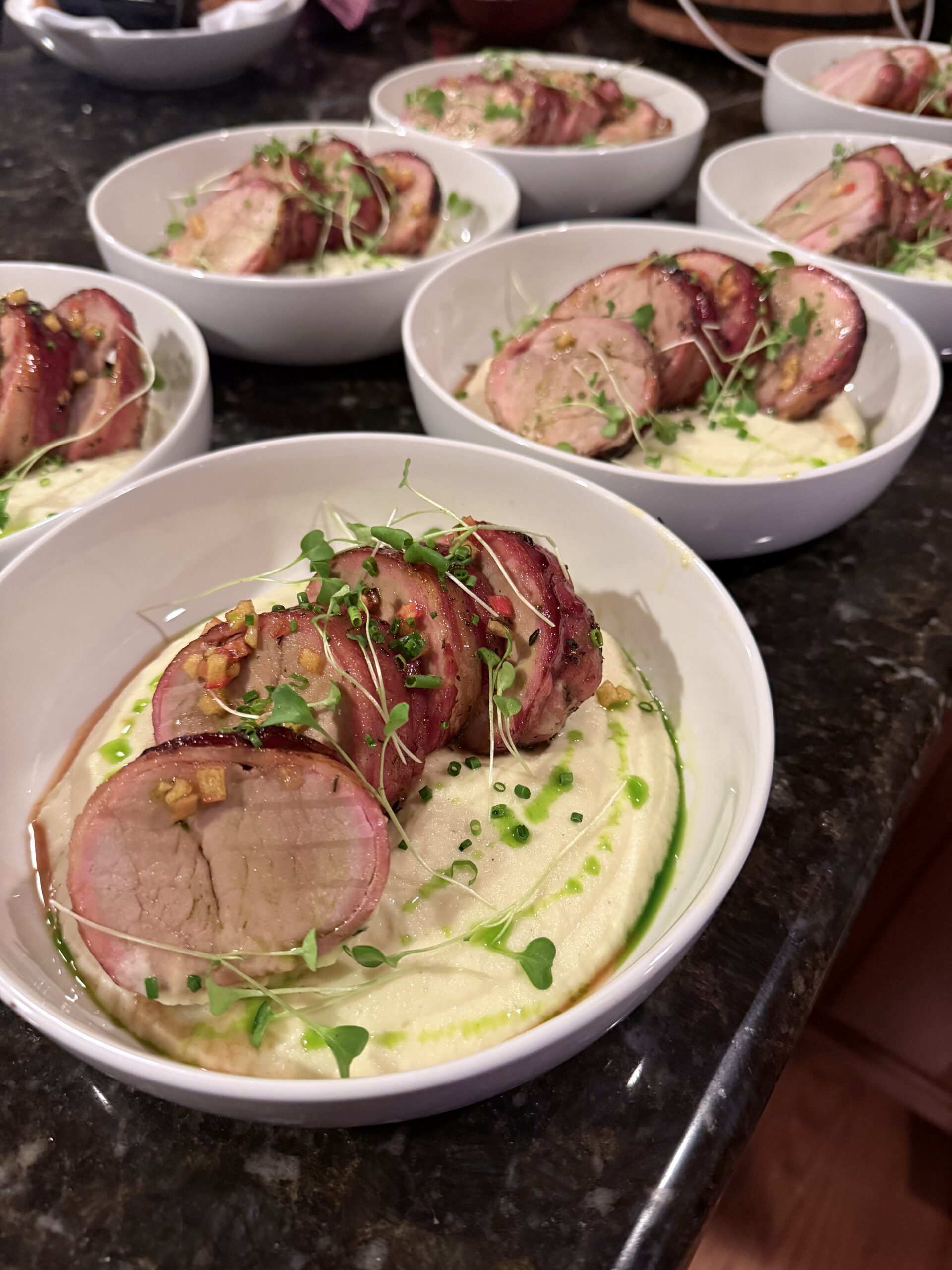
Spoon the roasted garlic potato purée into a warm wide bowl first. Use the back of a large spoon to pull it across the base in a broad sweep. Not a full circle, not a neat pile. A movement. This gives the plate direction and creates a base for the tenderloin to rest against.
Let the tenderloin rest for a full five minutes after it comes out of the oven before you cut it. This is not optional. Cutting too early releases the juices and the inside goes from pink and juicy to pale and dry before it reaches the table. When you do slice, you should see that gradient from the crispy bacon ring on the outside to the blush of pink in the center.
Slice the rested tenderloin into four medallions and shingle them across the purée, each medallion overlapping the next by about a third, cut-side up. Spoon the warm peach bourbon glaze over the tenderloin generously, letting it fall naturally onto the plate around the edges. Do not drown it. The glaze should illuminate the meat, not hide it.
Finish with fresh thyme sprigs or microgreens across the top. If you have edible flower petals, use them. They do something to the presentation that no other garnish matches. On a white plate, this dish looks like it arrived from somewhere with a waiting list.
Chef’s Notes
Plating: White or off-white wide bowls give the pale purée room to sit and let the medallions land on top with a clean edge. A dark vessel flattens the color of the pork and the glaze.
Make-Ahead Tips for Peach Bourbon Pork Tenderloin
Wine: A lightly oaked Chardonnay or Viognier pairs cleanly with the peach notes. If you want red, Pinot Noir works well. Avoid anything too tannic. A big Cabernet will fight the sweetness of the glaze and neither will win.
Prep ahead: The roasted garlic and the glaze can both be made a day or two ahead and refrigerated. This makes peach bourbon pork tenderloin practical for dinner party service. The purée holds well for several hours on low heat. The tenderloin is best cooked to order, but you can sear it ahead and finish the oven portion just before serving without losing much.
Scaling: This recipe scales cleanly. One tenderloin feeds two comfortably. For eight people, you are cooking four. Give the tenderloins space in the pan so the bacon crisps rather than steams. Batch the glaze once rather than doubling; it reduces more consistently in a single pan.
Swaps: No bourbon on hand? Brandy is the closest substitute. No fresh peaches? Ripe mango gets close in texture and sweetness and works well with the smoked paprika. For a non-pork version, this glaze is excellent over chicken thighs using the same sear-then-roast method. The timing changes but the approach does not.
If you are building a full menu around this, the duck breast with cherry port wine sauce is a similar sear-and-sauce approach worth having in your rotation. For a lighter option in the same seasonal spirit, the mahi mahi coconut curry resets the palate between heavier dinner party menus. The butternut squash ricotta ravioli makes an excellent first course before this tenderloin, and if someone at the table wants a beef option, the filet mignon apple brandy glaze covers that ground.
Bacon Wrapped Pork Tenderloin with Peach Bourbon Glaze and Roasted Garlic Potato Purée
Ingredients
Method
- Preheat oven to 400°F. Slice the tops off the garlic heads to expose the cloves. Drizzle with olive oil, wrap in foil, and roast for 20 minutes until soft and golden.
- Meanwhile, peel and cube the Yukon Gold potatoes. Boil in salted water for 10 to 12 minutes until fork tender. Drain well.
- Add cold butter to the drained potatoes while they’re still hot and let it melt through before you start mashing. Then add warm heavy cream a little at a time. Squeeze the roasted garlic cloves in and mash (or pass through a ricer for the silkiest texture) until smooth. Season with salt and white pepper. Keep warm.
- Combine fresh peach, bourbon, honey, Dijon mustard, apple cider vinegar, and smoked paprika in a small saucepan over medium heat.
- Cook for 6 to 8 minutes, stirring occasionally, until the peaches break down and the glaze thickens. Season with salt and pepper. Set aside.
- Pat the pork tenderloin portions dry and season with salt and black pepper. Wrap each portion with 2 strips of applewood-smoked bacon, securing with toothpicks if needed.
- Heat avocado oil in an oven-safe skillet over medium-high heat. Sear the bacon-wrapped tenderloin 3 to 4 minutes per side until the bacon is crispy and golden on all sides.
- Brush generously with the peach bourbon glaze. Transfer the skillet to the 400°F oven and roast for 10 to 12 minutes until the internal temperature reaches 145°F.
- Remove from oven and rest for 5 minutes before slicing. Brush with additional glaze before serving.
- Sweep the roasted garlic potato purée across the base of each warm wide bowl with the back of a large spoon. Slice the rested tenderloin into four medallions and shingle them over the purée, cut-side up, each medallion overlapping the next by about a third.
- Drizzle with the remaining peach bourbon glaze. Garnish with fresh thyme or microgreens and edible flower petals. Serve immediately.
Notes
Filed Under: Equipment
Shop This Recipe

Misen 5-Ply Stainless Steel Pan
Check Price →

ThermoWorks ThermoPop 2
Check Price →

OXO Silicone Basting Brush
Check Price →

All-Clad D3 Sauce Pan, 2 Qt
Check Price →
As an Amazon Associate I earn from qualifying purchases.
Filed Under: Equipment
Shop This Recipe
Misen 5-Ply Stainless Steel Pan
Check Price →ThermoWorks ThermoPop 2
Check Price →OXO Silicone Basting Brush
Check Price →All-Clad D3 Sauce Pan, 2 Qt
Check Price →As an Amazon Associate I earn from qualifying purchases.
Dinner Party Dossier
Planning the whole dinner?
The Dossier is three complete multi-course menus from private chef events, built around what actually worked at the table. Shopping lists, prep timelines, plating notes, every component per course.
Open the Dossier — $27Did You Make This?
Rate this recipe.
If this recipe made it to your table, tap a star. It helps other home cooks find it.
Classified Access
Get the recipes before they’re public.
New case files. Chef’s notes. The stuff I don’t post anywhere else. Delivered weekly.