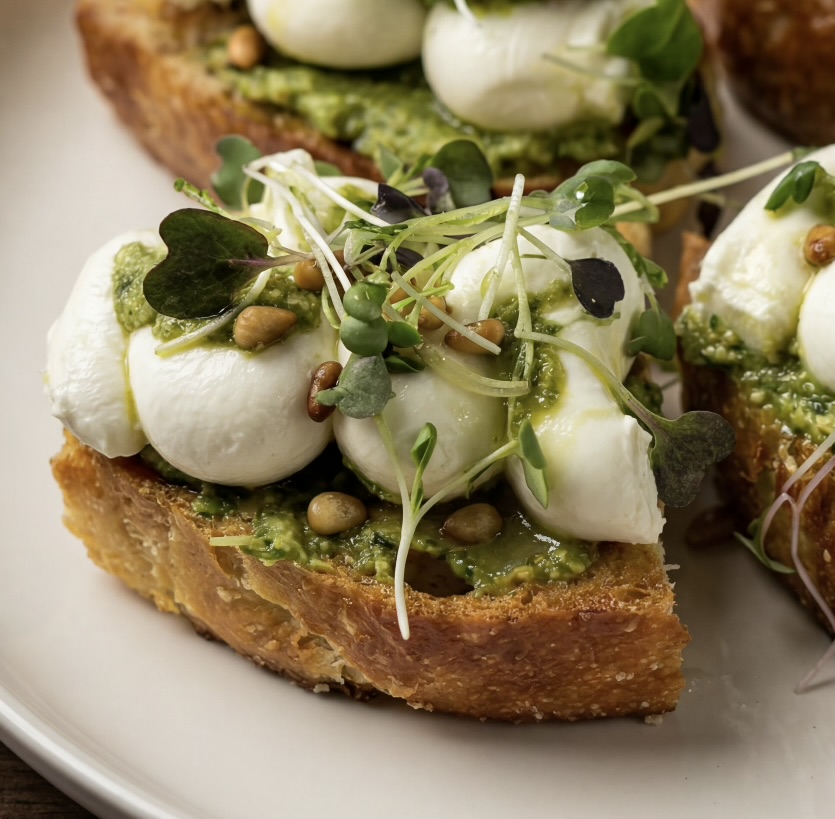
Ingredients
Equipment
Method
Toast the Focaccia
- Heat a heavy stainless steel skillet dry over medium-high until it is properly hot, about 2 minutes. Brush one side of each focaccia slice lightly with olive oil.
- Place focaccia oil-side down in the dry skillet. Do not move it. Toast 4 to 5 minutes until deep golden with some char on the edges, then flip and warm the second side 30 seconds.
- The edges should have some char on them. That bitterness is what balances the richness of the goat cheese. A pale, soft toast will sag under the toppings and disappear into the bite.
- Transfer immediately to a wire rack — not a plate — so the steam still releasing from the bread escapes. A flat surface traps it and the bottom softens within minutes. Finish with a pinch of flaky sea salt.
Make the Spring Onion Pesto
- Heat a dry stainless pan over high heat. Char the spring onions until blackened in spots, about 3 to 4 minutes per side. Let cool slightly, then trim any heavily charred outer layers.
- Add charred spring onions, pine nuts, Parmigiano, garlic, and lemon juice to a blender or food processor. Pulse to combine.
- Stream in olive oil while blending until a pesto consistency forms. Season with salt and pepper.
Charring the onions concentrates their sweetness and adds depth that raw or blanched onions cannot replicate. The blackened outer layers peel off and what remains underneath is intensely flavored and vivid green.
Pulse, don't blend continuously. You want texture left in the pesto. A completely smooth paste loses the body it needs to sit on top of the goat cheese without running off the edge.
Whip the Goat Cheese
- Beat goat cheese and cream cheese together on medium speed until smooth, about 2 minutes.
- Add heavy cream and beat until light and fluffy. Season with salt and a pinch of white pepper.
Room temperature cream cheese makes a real difference. Cold cream cheese stays lumpy no matter how long you beat it. Pull it out of the refrigerator thirty minutes before you start.
Dress the Greens
- Toss spring greens with lemon juice, olive oil, and a small pinch of salt just before assembling.
Assemble
- Spread a generous layer of whipped goat cheese on each toasted focaccia slice.
- Spoon spring onion pesto over the cheese. Top with dressed spring greens, radish slices, and a pinch of microgreens.
- Serve immediately while the focaccia is still warm and crisp.
Build the layers in order. Goat cheese first, then pesto, then greens. If you add the greens before the pesto sets, the cheese layer shifts and the whole assembly loses its structure.
Notes
Plating: Round white plate or long wooden board. Keep the toasts whole for a seated appetizer. Arrange in a loose cluster, pesto-side up, so the green layer leads the eye. A few microgreens and toasted pine nuts scattered over the tops. Flaky salt pinched across just before serving. The green, white, and gold stack carries it.
Wine pairing. Vermentino from Sardinia is the first call. The minerality and citrus lift mirrors the lemon in the pesto and the slight almond note complements the pine nuts. Sancerre or Pouilly-Fume works equally well. Stay crisp and white. No oak.
Prep ahead. The pesto can be made the day before and stored with a thin layer of olive oil pressed against the surface to prevent oxidation. The whipped goat cheese can be done the morning of and kept covered in the refrigerator. The toast can be made two to three hours in advance and held on a wire rack at room temperature. Day-of assembly takes ten minutes.
Scaling for service: This makes 8 to 10 toasts for 4. To 8 guests: double the pesto and goat cheese, one full bakery loaf yields 18 to 20 toasts. To 16: triple pesto, two loaves, toast in batches of 8 on a sheet pan so the oil hits the bread evenly. Assembled toasts hold 10 minutes max before the focaccia steams underneath from the goat cheese. Assemble to order at the pass.
Dietary swaps: To make it GF: sub a good GF focaccia (Schar or a local GF bakery). The pesto and whipped goat cheese are GF as written. Toast the GF focaccia a minute longer, the crumb is wetter. To make it dairy-free: swap the whipped goat cheese in step 3 for whipped cashew cream with lemon zest, and use nutritional yeast instead of the parm in the pesto. The tang is different, the lift from the lemon holds it. For nut-free: sub toasted sunflower or pumpkin seeds for the pine nuts one-for-one. Vegetarian as written.