Jerk Chicken Skewers
This post contains affiliate links. If you purchase through them I may earn a small commission at no extra cost to you.
Some links in this post are affiliate links. If you buy through them, I may earn a small commission at no cost to you. I only recommend gear I actually use in my private chef kitchen.
Cocktail party, Cape Cod vacation rental, August. The night these jerk chicken skewers became a permanent part of the rotation.
The client had rented a house right on the water in Chatham. One of those places where the deck wraps around two sides and the screen door never fully closes. Twelve guests, cold drinks already going when I pulled in. She met me in the kitchen and gave me what might be the best brief I’ve ever gotten from a client: no plates, no forks, nothing that slows down a conversation. That’s it. Figure it out.
I love that brief. Most people over-explain what they want. She just told me what she didn’t want and let me work. If you’ve ever thought about booking a private chef for a Cape Cod event through Partum Events, that’s the kind of trust that makes the food better. Every time.
Jerk chicken skewers with a pineapple glaze. That was the answer. One skewer is a complete bite. You pick it up, you eat it, you put the stick down, you keep talking. The jerk brings heat. The pineapple glaze tempers it and gives you something sticky and sweet to land on. I watched a guy eat three of them leaning against the railing without breaking eye contact with whoever he was talking to. That’s cocktail food doing its job.
How to Make Jerk Chicken Skewers
Marinate the Chicken
I soaked the skewers first thing because I knew I’d forget if I didn’t. Then I got the chicken into a bowl with olive oil, jerk seasoning, and salt. Every piece coated. The oil is doing real work here. It carries the spice into the surface of the meat. Without it the jerk just sits on top and falls off the second it hits the grill. I let that sit for about an hour while I set up everything else.
💡 Oil Carries the Spice: The olive oil isn’t just for moisture. It bonds the jerk seasoning to the chicken so the flavor stays put on the grill instead of falling through the grates.
Build the Skewers
Then, I built the skewers about twenty minutes before I needed the grill. Specifically, one piece of chicken, one piece of pineapple, all the way down. Not packed tight. A little space between each piece. Pack them too tight and you trap steam in the center. Steam means no char, and the char is the whole point.
💡 Leave Space on the Skewer: A gap between each piece lets heat circulate around every cube. Tight packing steams the centers instead of grilling them.
Grill for Char First
Next, the vacation rental grill cooperated, which is never a guarantee. I’ve shown up to houses where the grill hadn’t been cleaned since the previous tenant and the propane was at 5%. This one worked. I got it to medium-high and laid the skewers down.
In total, eight to ten minutes, turning every couple of minutes. I watched the color develop. The jerk seasoning goes from dusty brown to deep, almost black at the edges where the heat concentrates. That’s what you want. That’s the jerk locking in. The pineapple pieces start to blister and caramelize. The smell off the grill at that point is the reason people started wandering over from the deck.
💡 Glaze Goes On Last: Brush the pineapple glaze on in the final two minutes only. Earlier and the sugar burns before the chicken cooks through. Late means it tightens and goes glossy instead of scorching.
Make the Pineapple Glaze
Meanwhile, while the chicken was on the grill, I made the glaze in a small saucepan on the side burner. Specifically, pineapple juice, brown sugar, soy sauce, lime juice, a pinch of chili flakes. Four or five minutes on a simmer until it coated the back of a spoon. The timing works out almost exactly. Glaze ready right when the chicken has two minutes left.
Then, I brushed it on generously and didn’t touch them. Essentially, let the heat do the work. The glaze tightens, goes tacky, catches the light. Pulled them at 165°F. Hit them with one more pass of glaze off the heat. Scattered cilantro over the platter, tucked lime wedges at the edges, and walked it outside.
💡 Don’t Touch After Glazing: Once the glaze goes on, leave the skewers alone. Moving them breaks the caramelized layer before it has a chance to set.
Serve the Jerk Chicken Skewers
Finally, twelve people, one platter, gone in about eight minutes. Afterward, a couple of guests came back to the kitchen to ask if there were more. There weren’t. That’s how you know it worked.
Chef’s Notes
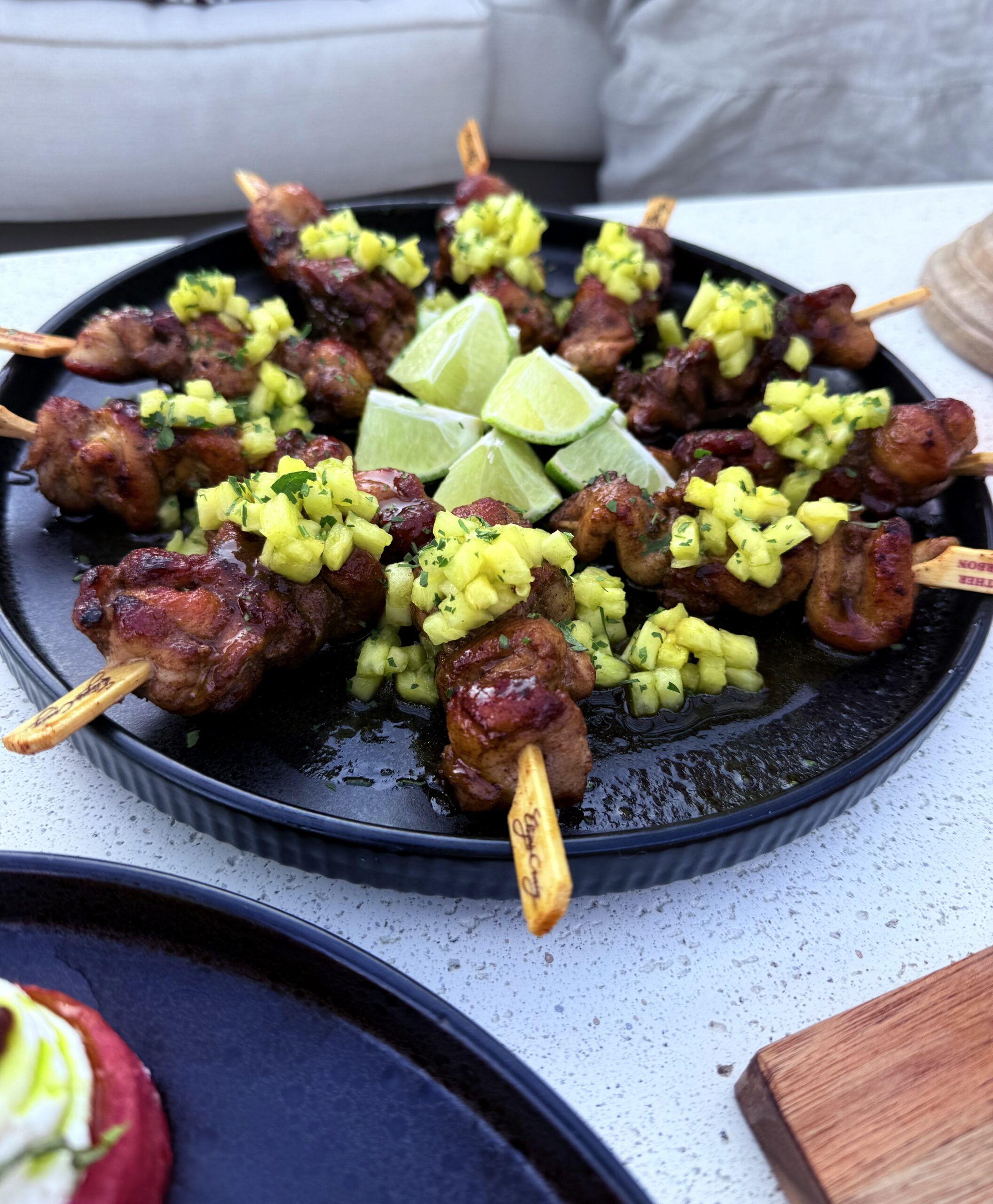
Plating: Fan the skewers around a warm dark plate, bone handles pointing out. Spoon fresh pineapple salsa across the chicken so the fruit catches on the meat. Lime wedges piled in the center so guests can grab one without asking. For a more formal cocktail setup, pull the chicken off the skewers and serve the pieces in small cups with a toothpick and a ramekin of extra glaze on the side.
Wine: A cold, off-dry Riesling handles the jerk heat and plays against the pineapple. If wine isn’t the direction, a light lager or a ginger beer does the same job. I’ve served these with dark rum cocktails at events and that works too.
Prep, Scaling, and Swaps
Prep ahead: Marinate the chicken up to 24 hours in advance. Make the glaze the morning of the event and store it covered in the fridge. Reheat on low before grilling. It tightens back up in about two minutes.
Scaling: This recipe doubles cleanly. Grill in batches and keep finished skewers in a low oven, 200°F, uncovered, while the next batch finishes. Don’t cover them or the char goes soft and you lose everything you built on the grill.
Swaps: Shrimp works in place of chicken. Reduce the cook time to two to three minutes per side. Tofu works for a vegetarian version but press it dry first or it falls apart on the skewer. No pineapple juice for the glaze, mango juice gets you close.
To build the rest of the menu around these jerk chicken skewers, I’ll pair them with a bright, herby sauce like my chimichurri sauce for anyone who wants a cooler counterpoint to the heat, or pass around spring onion pesto focaccia toast as a second cocktail bite. For something heartier on a plated night, the peach bourbon pork tenderloin carries a similar summer-fruit-meets-smoke energy.
Jerk Chicken Skewers
Ingredients
Equipment
Method
- If using wooden skewers, soak them in water for at least 20 minutes before grilling.
- Toss the cubed chicken with olive oil, jerk seasoning, and salt. Coat every piece evenly.
- Cover and refrigerate at least 1 hour, or up to 24 hours. The seasoning needs time to set into the meat — go straight to the grill and the jerk reads sharp on the surface and bland inside.
- Thread chicken onto the skewers, alternating with pineapple chunks.
- Combine pineapple juice, brown sugar, soy sauce, lime juice, and chili flakes in a small saucepan. Simmer over medium heat for 4 to 5 minutes until slightly thickened and glossy. It should coat the back of a spoon.
- Heat a grill or grill pan to medium-high. Cook the skewers for 8 to 10 minutes, turning every 2 to 3 minutes, until charred on the outside and cooked through to 165°F (74°C).
- In the last 2 minutes of grilling, brush the glaze generously over the skewers. Let it sit on the heat without moving the skewers so the glaze caramelizes and tightens.
- Pull the skewers off the grill and hit them with one more pass of glaze. Garnish with chopped cilantro and serve with lime wedges on the side.
Notes
Filed Under: Equipment
Shop This Recipe

Misen 5-Ply Stainless Steel Pan
Check Price →
Cutco 1738 Gourmet Prep Knife
Check Price →
Microplane Zester Grater
Check Price →As an Amazon Associate I earn from qualifying purchases.
Dinner Party Dossier
Planning the whole dinner?
The Dossier is three complete multi-course menus from private chef events, built around what actually worked at the table. Shopping lists, prep timelines, plating notes, every component per course.
Open the Dossier — $27Did You Make This?
Rate this recipe.
If this recipe made it to your table, tap a star. It helps other home cooks find it.
Classified Access
Get the recipes before they’re public.
New case files. Chef’s notes. The stuff I don’t post anywhere else. Delivered weekly.