Short Rib Arancini | Red Wine Braised, Fontina Center
Short rib arancini, Christmas dinner party, Cape Cod, late December. A family home in Falmouth that I still think about. Not because of the kitchen, but because there were four full Christmas trees. Four. One in the entryway, one in the living room, one in the dining room, and one I found in a back hallway that I don’t think anyone had actually seen in three days. It smelled incredible in there. Pine, red wine, and short rib arancini coming together low on the stove. I genuinely didn’t want to leave.
Some links in this post are affiliate links. If you buy through them, I may earn a small commission at no cost to you. I only recommend gear I actually use in my private chef kitchen.
Eight guests, plated first course, proper sit-down dinner. The client had her wine handled. She didn’t need me touching that. What she needed was an opener that matched the room. Something warm, rich, a little dramatic. Something that said “this is the good version of Christmas dinner.” I’ve done a lot of elegant dinner parties in coastal New England, and the ones I remember are the ones where the first bite does something to the table. Conversation stops for a second. Forks go down. That’s what I was building toward. You can read more about what that kind of event actually takes over at Partum Events.
Short rib arancini. That was the answer. Braised short rib folded into risotto, fontina hidden in the center, fried until the crust is just barely holding together, set on truffle aioli and finished with parmesan and microgreens. It is exactly as good as it sounds. And it fit the room in a way that nothing else would have. It plays in the same lane as my cinnamon spiced lamb lollipops. A plated first course that announces the meal and tells the table to pay attention.
Why This Short Rib Arancini Recipe Works
Most arancini recipes are a vehicle for leftover risotto. Nothing wrong with that. However, this one is built from the ground up to be the dish, not the day-after solution.
The short rib braise is the backbone. It goes into the risotto, not beside it. Every bite of rice has that braising liquid worked into it. The fontina center melts during frying and gives you a molten pull when someone cuts into it. That moment is not an accident. It’s the whole point.
The other thing most people get wrong with arancini is the risotto itself. They use it warm or they don’t cool it long enough. Warm risotto won’t hold shape. You end up with blobs that fall apart in the oil, which is its own kind of tragedy. I made the risotto the day before, refrigerated it overnight, and worked with it cold the next morning. That’s not a shortcut. That’s the correct method.
The truffle aioli is not a flex. It cuts through the richness of the fried crust and brings the whole thing back into balance. Without it, arancini can sit heavy. With it, you want another one immediately.
What You Need for Short Rib Arancini
For the Braise
For the short rib braise: Boneless short rib, cut into large chunks. I use about a third of a pound per serving when I’m building for a small group. You want a big, hearty cut with enough marbling to survive low and slow. Leaner beef will give you dry, stringy threads, and that’s not what’s going into this risotto.
For the Risotto and Center
Red wine for the braise. I’m not using the expensive bottle. Something drinkable but not precious. Côtes du Rhône, a basic Chianti, whatever’s open. It goes into the pan, not the glass.
For the risotto: Arborio rice. No substitutions here. It has the starch content you need to get that creamy bind. The point is the starch. Other rices don’t do what arborio does.
Parmesan, finely grated. Not the stuff in the green can. Buy a wedge and grate it yourself. It melts properly and doesn’t clump.
For the center: Fontina. This is the right cheese for this application. It melts clean, it’s mild enough not to compete with the short rib, and it gets molten and stretchy inside a hot arancini ball. Gruyère works if you can’t find good fontina. Mozzarella will also melt, but it’s blander and wetter. I stick with fontina.
For the Crust and Aioli
For the breading: Standard three-step setup. Flour, beaten egg, panko. Panko specifically because it gives you a lighter, crispier crust than regular breadcrumbs. Regular breadcrumbs pack together and go dense. Panko stays open and fries up with texture.
For the truffle aioli: Good mayo, truffle oil, lemon juice. The lemon is not optional. It lifts the whole thing. Without it you just have greasy mayo with truffle oil in it, which is not the same as a sauce.
How to Make Short Rib Arancini
Braise the Short Rib
I started the braise the day before the dinner. Not because I had to, but because I wanted the short rib to have time to cool completely and firm up before it went into anything. I seasoned the chunks with salt and pepper, got olive oil hot in a heavy pan, and seared everything on all sides. Not cooking it through. Just getting color on the surface. That crust matters. It’s where a lot of the flavor in the final braise comes from.
Once the meat had color, I added diced onion and a smashed garlic clove and let that go for a minute. Tomato paste went in next, stirred so it coated everything and had a second to cook off the raw edge. After that, the wine, and I scraped up everything from the bottom of the pan. Beef broth followed, along with a pinch of thyme, lid on, heat down low. An hour and a half. The house started smelling the way a Christmas dinner is supposed to smell. I checked it at the hour mark. Fork went in like it wasn’t even there. I gave it a little longer anyway.
💡 Sear Before You Braise: The crust you build in the first five minutes adds depth to the whole braise. Skip it and the liquid never gets that color or that flavor foundation.
I shredded the short rib while it was still warm because it pulls apart easier that way. Fine shreds, not big chunks. Then into a container, and into the refrigerator overnight. The braising liquid I strained and kept separately. A little of that went into the risotto the next morning to tie everything together.
Build and Cool the Risotto
The risotto I also made the day before. Butter and olive oil in a wide pan, onion cooked low until it was totally soft and translucent, then the arborio went in and I let it toast for a minute. You can hear it. The edges of the rice go slightly translucent and there’s a faint nutty smell. Then white wine in, stirred until absorbed. Then warm chicken broth, ladle by ladle, always stirring, always letting the previous addition get absorbed before the next one. This takes time. You can’t rush arborio. If you rush it, the starch doesn’t release properly and you end up with rice in liquid instead of actual risotto.
💡 Toast the Rice: That one minute of toasting before the wine goes in keeps the grains from going mushy. It sets the outer layer so the starch releases gradually instead of all at once.
When the risotto was creamy and the rice was just tender, I folded in the parmesan and tasted for salt. Then I spread it on a sheet pan to cool fast, transferred it to a container, and refrigerated it overnight next to the short rib. Cold risotto is the version you want to work with the next day. Warm risotto has no structural integrity. It’s soup.
Form the Short Rib Arancini
The morning of the dinner, I mixed the shredded short rib into the cold risotto. Worked it through with my hands until the meat was distributed evenly. I portioned the mix into small balls, pressed a cube of fontina into the center of each one, and closed the risotto back around it. The fontina cube should disappear completely. If you can see it, close it better. During frying, any exposed fontina is just going to melt straight out into the oil.
💡 Seal the Cheese: If fontina is showing through anywhere before it hits the oil, it will leak out and you’ll lose the whole molten center. Press the risotto closed and roll the ball one more time.
Bread and Fry
Breading was flour, egg, panko. One hand stays dry, one hand goes in the egg. This is the system that keeps the whole thing from becoming a paste on your palms. Each ball got coated in flour first so the egg had something to stick to, then into the beaten egg, then into the panko. I pressed the panko in a little so it adhered. Then the tray went into the refrigerator for ten minutes to firm up before frying.
Oil to 350°F. I used a thermometer because 350°F is where the crust sets before the center overcooks. Too low and the breading absorbs oil instead of crisping. Too high and you get a dark crust with a cold center. Three to four minutes per batch, turning gently, until the outside was deep golden. Out onto paper towels, a pinch of salt while still hot.
💡 Oil Temperature Matters: At 350°F the crust sets fast and the inside heats through evenly. Drop below that and you’re making oil-soaked rice balls, not arancini.
Aioli and Plate
The truffle aioli I made the day before. Mayo, truffle oil, lemon juice, salt, pepper. Whisked until smooth. That’s it. It sits in the refrigerator overnight and comes out ready to go. The lemon is what makes it work as a sauce rather than just a condiment. It brightens the truffle and cuts the fat from the fried crust.
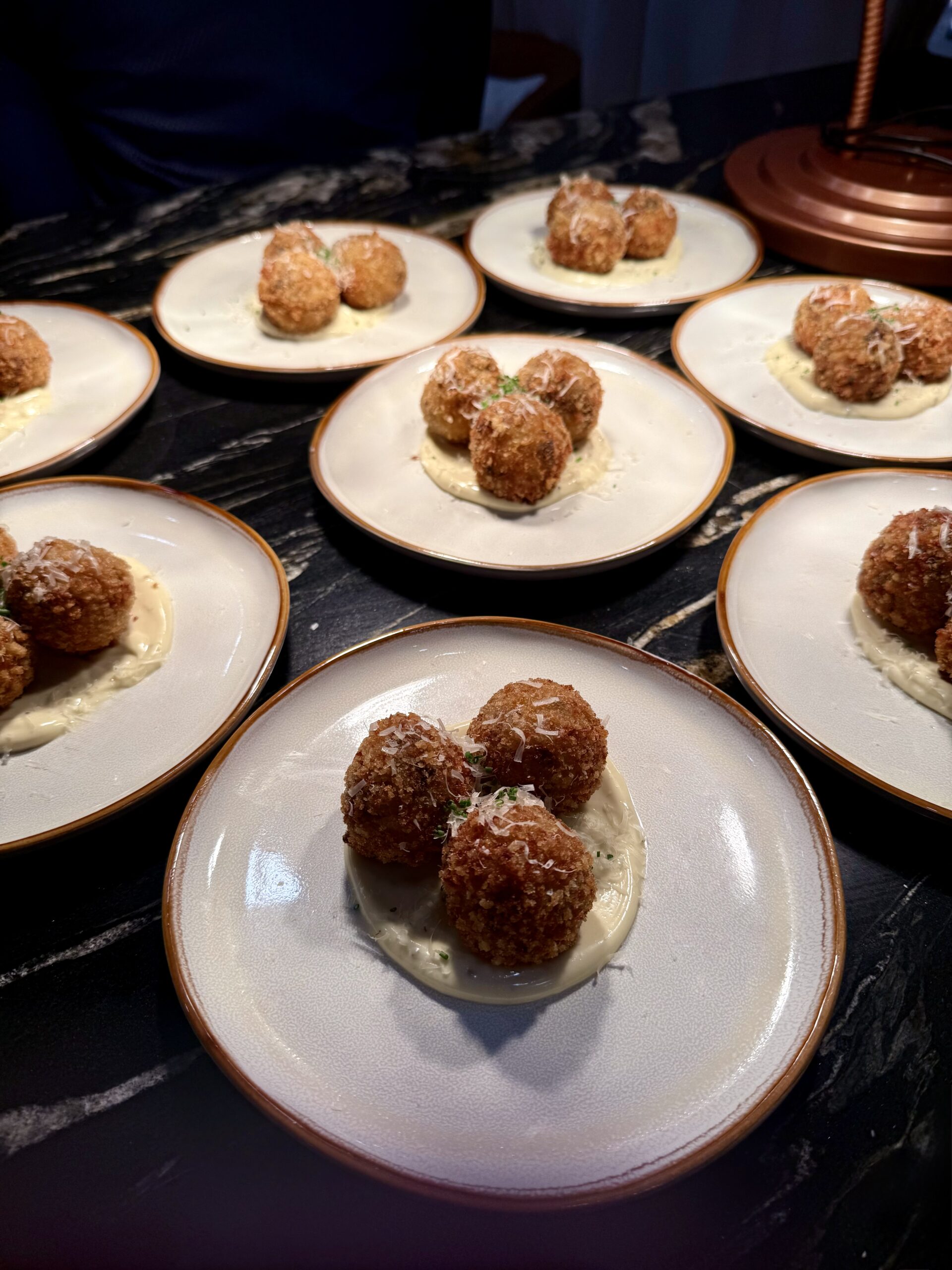
For plating, I spooned the aioli into a round pool on each plate first, then set two arancini into it. A little finely grated parmesan over everything, a few microgreens for color. Four Christmas trees lit the background. A room out of a magazine. When the first course went to the table, conversation stopped. That’s the whole job right there.
Chef’s Notes for Short Rib Arancini
Plating and Wine
Plating: Spoon the truffle aioli into a round pool first before the arancini go on. The pool gives you something to set the balls into so they don’t roll around the plate. Two arancini per person for a first course. Finish with finely grated parmesan and a few microgreens or chives. Nothing heavy. The arancini are already doing the work.
Wine: The client handled her own wine for this dinner, which I respect completely. If I’m choosing, I’m going with a Sangiovese or a lighter Barbera. Something with enough acidity to cut through the richness without overwhelming the short rib. A big Cab is going to crush it. A good Burgundy would be excellent if the budget is there.
Prep, Scaling, and Swaps
Prep ahead: This dish was designed to be made in stages. Braise the short rib two days out. Make the risotto the day before. Mix, form, and bread the arancini the morning of the dinner and refrigerate them until it’s time to fry. The truffle aioli keeps for five days in the refrigerator. Day-of work is just frying and plating.
Scaling: The original recipe I built was for 28 pieces. This version scales to four servings, two arancini each. If you’re feeding a larger group, the ratios hold. Just multiply the risotto and braise quantities and fry in batches. Don’t crowd the oil. Crowding drops the temperature and you lose the crust.
Swaps: Gruyère works in place of fontina. It melts clean and has a bit more character. Mozzarella will melt but it’s wetter and blander. I’d stick with a semi-firm cheese that melts without releasing too much liquid. For the braise, bone-in short rib is fine. Just remember you’re losing some weight to the bone, so start with more.
Case No. 018
Short Rib Arancini
Ingredients
Equipment
Method
- Season short rib chunks generously with salt and black pepper on all sides.
- Heat olive oil in a heavy pan over medium-high heat. Sear the short rib on all sides until a deep brown crust forms, about 2 to 3 minutes per side. Don’t rush this step. The crust is where the flavor builds.
- Add the diced onion and smashed garlic to the pan. Cook for 1 minute, stirring to coat in the fat.
- Stir in the tomato paste and let it cook for 30 seconds to lose the raw edge. Deglaze with the red wine, scraping up anything stuck to the bottom of the pan.
- Add the beef broth and thyme. Cover and simmer on the lowest heat for 1 to 1.5 hours, until the meat is completely fork-tender.
- Remove the short rib and shred it finely while still warm. Cool completely before mixing into the risotto.
- In a wide, heavy pan, heat the butter and olive oil over medium heat. Add the diced onion and cook low and slow until completely soft and translucent, about 8 minutes.
- Add the arborio rice and toast for 1 minute, stirring constantly. The edges of the grains will go slightly translucent and the pan will smell faintly nutty.
- Deglaze with the white wine and stir until fully absorbed.
- Add the warm chicken broth one ladle at a time, stirring and letting each addition absorb before adding the next. Continue until the rice is tender and creamy, about 18 to 20 minutes total.
- Fold in the finely grated parmesan and season with salt and pepper. Spread onto a sheet pan to cool quickly, then transfer to a container and refrigerate until completely cold. Cold risotto holds shape during forming.
- Mix the shredded short rib into the cold risotto with clean hands until the meat is distributed evenly throughout.
- Divide the mixture into 8 equal portions. Press a cube of fontina into the center of each portion and close the risotto firmly around it. Roll into a smooth ball. No fontina should be visible on the surface.
- Set up three shallow bowls: flour, beaten egg, and panko breadcrumbs. Keep one hand dry and one hand wet to avoid coating your palms.
- Roll each arancini ball in flour first, then dip in beaten egg, then press firmly into the panko so the coating adheres completely.
- Place the breaded arancini on a tray and refrigerate for 10 minutes to firm up before frying.
- Heat frying oil to 350°F in a deep, heavy pot. Use a thermometer. Temperature matters here.
- Fry the arancini in batches, turning gently, for 3 to 4 minutes until deep golden brown. Do not crowd the pot.
- Drain on paper towels and season with a pinch of salt immediately while still hot.
- Whisk together the mayonnaise, truffle oil, lemon juice, salt, and black pepper until smooth. Refrigerate until ready to serve. This can be made up to five days ahead.
- Spoon a generous amount of truffle aioli onto each plate and drag the back of a spoon through it to create a smear.
- Set two arancini on top of the aioli. Finish with a pinch of finely grated parmesan and a few microgreens or chives.
Notes
Filed Under: Equipment
Shop This Recipe

Misen 5-Ply Stainless Steel Pan
Check Price →
Cutco 1738 Gourmet Prep Knife
Check Price →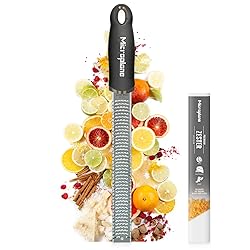
Microplane Zester Grater
Check Price →As an Amazon Associate I earn from qualifying purchases.
Dinner Party Dossier
Planning the whole dinner?
The Dossier is three complete multi-course menus from private chef events, built around what actually worked at the table. Shopping lists, prep timelines, plating notes, every component per course.
Open the Dossier — $27Did You Make This?
Rate this recipe.
If this recipe made it to your table, tap a star. It helps other home cooks find it.
Classified Access
Get the recipes before they’re public.
New case files. Chef’s notes. The stuff I don’t post anywhere else. Delivered weekly.