Gluten-Free Lemon Ricotta Tart
Mother’s Day dinner, Providence, mid-May. The house was one of those College Hill Victorians two blocks up from Thayer Street, the kind with a wraparound porch and more windows than walls. Six women, a table set outside, a lemon ricotta tart already sketched in my head, and a brief that came in exactly three words: “light but special.”
Some links in this post are affiliate links. If you buy through them, I may earn a small commission at no cost to you. I only recommend gear I actually use in my private chef kitchen.
I love that. Light but special. It sounds simple until you’re standing in a kitchen at 4pm trying to figure out what “special” means to a woman whose daughter booked a private chef so she wouldn’t have to do anything for once. I went lemon ricotta tart for dessert before I even finished unpacking my kit. Gluten-free crust, creamy lemon filling, cold from the fridge and plated with a few berries from the Hope Street Farmers Market that morning. Light enough to follow a full dinner. Special enough that people notice.
If you’re planning something similar, Partum Events has a breakdown of what to expect when you hire a private chef in Rhode Island. Worth reading before you start planning.
The host came into the kitchen while I was zesting lemons and said, “Is that going to be tart or sweet?” I told her both. She said, “Good.” That was the whole conversation. When dessert hit the table, one of her guests stopped mid-story, looked at the plate, and said, “Wait, what is this?” That’s the reaction you want.
Why This Lemon Ricotta Tart Recipe Works
Most lemon tarts rely on a curd. Nothing wrong with that. But curd takes patience and a double boiler and exactly zero forgiveness if you walk away for thirty seconds. Ricotta filling is different. You whisk everything together in one bowl and pour it in. It sets in the oven and comes out creamy, not dense, with a clean lemon flavor that doesn’t fight you. If you want something richer and more technique-heavy, the chocolate hazelnut tart salted caramel is the other end of the dessert tart spectrum.
The GF crust is the part people expect to be the weak link. It isn’t. Almond flour and a little coconut flour give you a crust that holds its shape, slices clean, and actually tastes like something. It has a slight nuttiness that works with the lemon. A standard pastry crust doesn’t do that.
What most people get wrong: they pull the tart too early because the center still looks loose. Leave it. A jiggly center when it comes out of the oven is correct. The filling firms up as it cools, then again in the fridge. Therefore, if it’s set solid in the oven, you’ve gone too far and the texture is off.
💡 Jiggly Is Fine: The center should wobble like set Jell-O when you pull it from the oven. That’s where you want it. It finishes setting in the fridge.
What You Need
Almond flour is the backbone of the crust. Use blanched almond flour, not almond meal. Meal is coarser and the crust ends up gritty. In contrast, blanched gives you a fine, even texture that presses smooth.
Coconut flour is there in a small amount, just a quarter cup. It absorbs moisture and keeps the crust from being too oily. Besides, a little goes a long way with coconut flour. Don’t swap it out and don’t increase it.
Ricotta needs to be whole milk. Part skim is watery and the filling won’t set properly. If your ricotta looks wet in the container, strain it for twenty minutes through a fine mesh sieve before you use it. I always do this when I’m working with an unfamiliar brand.
Lemons Zest and juice, both. The zest is where most of the flavor lives. Don’t skip it, don’t reduce it, don’t use bottled juice. This tart is built around fresh lemon. That’s the whole point.
Eggs are what make the filling set. Three eggs for four servings. Specifically, they give the ricotta structure without making it rubbery.
💡 Strain Your Ricotta: Wet ricotta gives you a filling that doesn’t set cleanly. Thirty minutes in a fine mesh sieve fixes that before it becomes a problem.
How to Make Lemon Ricotta Tart
I set the oven to 350°F as soon as I walked in the door. Not because the tart was going in immediately, but because working in a rented kitchen means the oven takes longer than expected and you don’t find that out until you need it.
The Lemon Ricotta Tart Crust
I started with the crust. Almond flour, coconut flour, sugar, and salt into a bowl. Melted butter went in, then the egg. I worked it together with a fork until it looked like wet sand. It’s not a dough you roll out. You press it directly into the tart pan, and the technique matters here. I started in the center and pushed outward, then worked the edges up the sides with my thumb. Even thickness throughout. However, if one spot is thinner, it browns faster and the crust cracks when you slice.
💡 Press, Don’t Roll: This crust goes straight into the pan by hand. Use your thumb to work it up the sides evenly. Thin spots brown before the rest of the crust is done.
I put the crust in for about eleven minutes. You want it just golden at the edges and set in the center. Not dark. Not pale. That middle-ground color that tells you the butter has cooked through. I pulled it and let it cool on the counter while I worked on the filling.
Mix the Filling
Ricotta, sugar, lemon zest, lemon juice, eggs, vanilla, pinch of salt. Everything in one bowl. I whisked it until it was completely smooth, no lumps, no streaks. Takes about two minutes. The bowl smells unbelievable at this point. Every guest who walked past the kitchen doorway stopped and looked in. The host’s mother asked if she could have a spoonful before it baked. I told her she could have two.
Bake, Cool, and Plate
I poured the filling into the cooled crust and slid it into the oven. Twenty-eight minutes. When I checked it, the edges were set and the center had that slow wobble. I pulled it. The filling finished setting as it cooled instead of turning dry and rubbery in the oven.
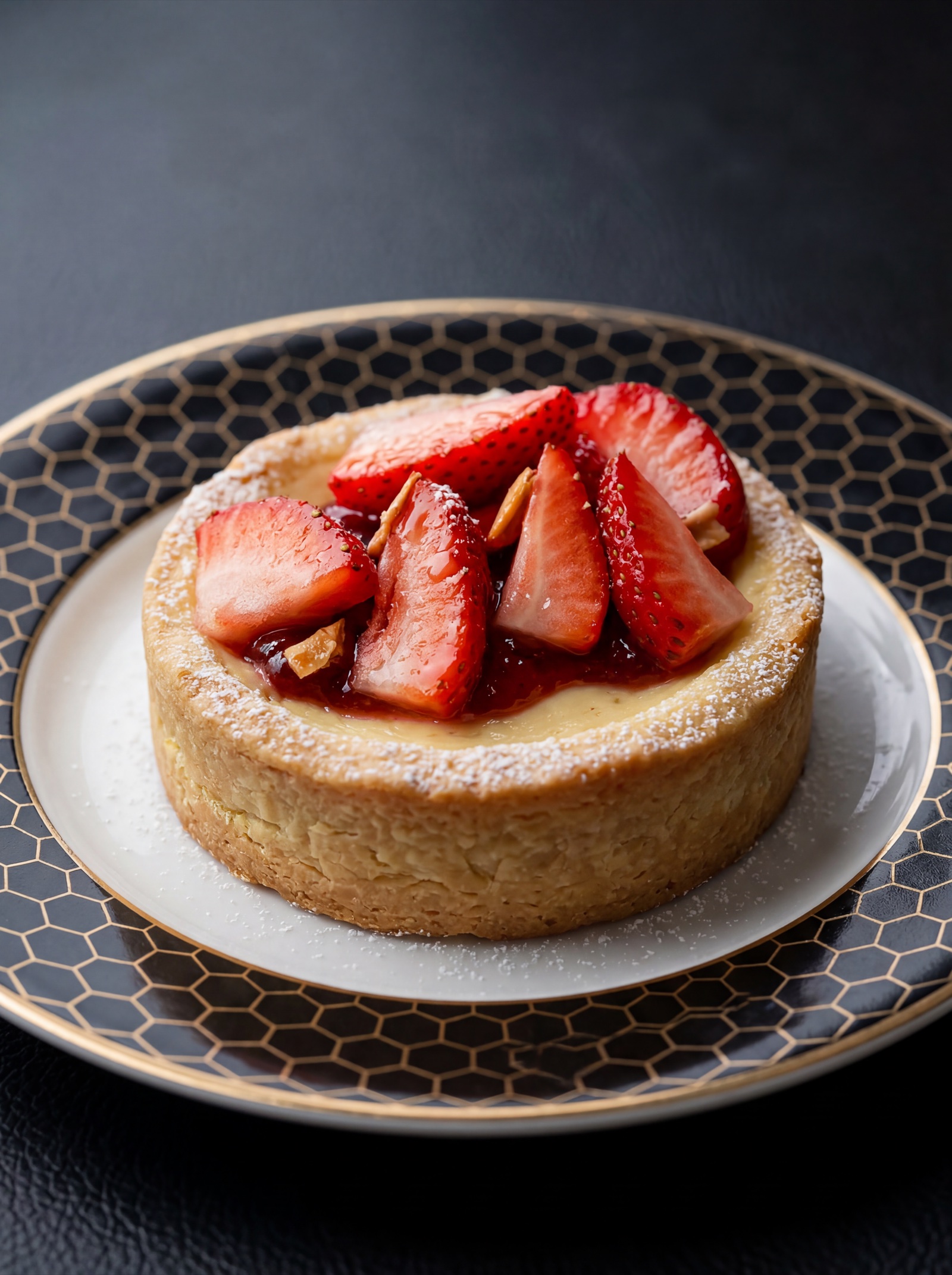
The tart cooled on the counter for about thirty minutes, then went into the fridge. I plated it cold and whole, dusted with a little powdered sugar, and piled sliced strawberries on top, with a spoon of strawberry coulis running between them when I had it on hand. It looked right for the occasion.
Chef’s Notes
Plating: Cold and simple. Powdered sugar through a fine sieve, sliced strawberries on top, and a small spoon of strawberry coulis through them if you have it. This is a clean plate, not a garnish competition.
Wine: A glass of Moscato d’Asti works well here. Light, a little sweet, low alcohol. It doesn’t fight the lemon. A dry Prosecco also works if you want something drier.
Prep ahead: This lemon ricotta tart is better made the day before. The filling sets more firmly overnight and the flavors deepen. I always make it at least two hours ahead, but overnight is the move if you have the time.
Scaling: The recipe in the card is scaled to four servings. For a larger group, the original yields eight to ten slices from a standard 9-inch tart pan. Scale the filling proportionally and use the same pan. The bake time stays the same.
Swaps: Honey works in place of granulated sugar in the filling, same amount. For a dairy-free version, use a good cashew or almond ricotta and vegan butter in the crust. A flax egg works in the crust too. I’ve made this version for guests with multiple dietary restrictions and it still holds together and tastes clean.
Case No. 017
Gluten-Free Lemon Ricotta Tart
Ingredients
Equipment
Method
- Preheat the oven to 350°F (175°C).
- Combine the almond flour, coconut flour, granulated sugar, and salt in a mixing bowl. Add the melted butter and egg and mix until the dough comes together. It should look like wet sand and hold together when pressed.
- Press the dough evenly into the bottom and sides of a 9-inch tart pan with a removable bottom. Smooth and compact with your fingers or the back of a measuring cup.
- Bake the crust for 10 to 12 minutes, until lightly golden at the edges and set in the center. Remove from the oven and let cool completely before adding the filling.
- In a large bowl, whisk together the ricotta, sugar, lemon zest, lemon juice, egg, vanilla extract, and a pinch of salt until completely smooth with no lumps or streaks. About two minutes of whisking.
- Pour the filling into the cooled crust and spread evenly.
- Bake at 350°F for 25 to 30 minutes. The edges should be set and the center should still have a slow wobble when you move the pan. Pull it there. Do not wait for the center to look fully set.
- Let the tart cool completely in the pan at room temperature, about 30 minutes. Then refrigerate for at least 2 hours before slicing. Overnight is better.
- Slice cold with a sharp knife. Dust with powdered sugar through a fine sieve, add fresh berries, and finish with lemon zest curls if using. Serve immediately.
Notes
Filed Under: Equipment
Shop This Recipe

Winco 8-Inch Fine Mesh Strainer
Check Price →
Perforated Stainless Steel Tart Mold, 4.5″ (12-pack)
Check Price →
Cutco 1738 Gourmet Prep Knife
Check Price →As an Amazon Associate I earn from qualifying purchases.
Dinner Party Dossier
Planning the whole dinner?
The Dossier is three complete multi-course menus from private chef events, built around what actually worked at the table. Shopping lists, prep timelines, plating notes, every component per course.
Open the Dossier — $27Did You Make This?
Rate this recipe.
If this recipe made it to your table, tap a star. It helps other home cooks find it.
Classified Access
Get the recipes before they’re public.
New case files. Chef’s notes. The stuff I don’t post anywhere else. Delivered weekly.