Duck Breast with Cherry Port Wine Sauce
If you’ve never made duck breast with cherry port wine sauce at home, this is the one to start with. It came together on a random Tuesday in November. I was cooking for a couple in Newport, anniversary dinner, just the two of them, candles, the whole thing. She’d told me during the planning call, “I want something I’d never make myself, but don’t make it weird.” I love that. Give me a vibe and get out of my way.
I’d grabbed some really nice duck breasts from a local farm earlier that week. Fat caps like you wouldn’t believe. And I had this bottle of tawny port sitting on my counter that I kept walking past thinking, okay, today’s the day. The cherries were from the tail end of the season, almost too ripe, which honestly is when you want them for cooking. They just fall apart into the pan.
How It All Came Together
I didn’t really plan the dish. I scored the skin, threw the breasts uncovered in the fridge to dry age for 48 hours. That’s my move for skin that actually shatters. Then I just kind of let the rest figure itself out. Cold pan, fat rendering, shallots, port, cherries, stock, butter. The carrot puree happened because I had a bag of farmers market carrots that needed to get used up and I thought, why not. Roasted them off, blended them with a little butter and cream, and honestly it ended up being the thing that tied the whole plate together. That sweetness under the duck with the tart cherry sauce on top. It just worked.
When I brought it to the table she stopped talking mid-sentence and just stared at the plate. Her husband laughed. That’s the whole reason I do this job.
It’s been on my rotation ever since. Probably make it once a month for clients at this point. Looks like something you’d wait two hours for at a restaurant but it’s really not that complicated once you know the move.
Why This Duck Breast with Cherry Port Wine Sauce Changes Everything
Every time I put duck on a menu proposal somebody goes, “Oh I don’t know, I’ve never cooked duck.” And I always tell them the same thing. It’s honestly easier than steak. I’m not being nice, I mean it.
A ribeye gives you like a 90-second window between perfect and ruined. Duck breast? Way more forgiving. The fat cap does most of the work. Score it so it renders evenly, then stick it uncovered in the fridge for 48 hours. That’s the real move. The surface dries out completely so when it hits the pan there’s no moisture fighting you. Just pure crackly golden crust.
Cold pan. Not hot. Cold. Let it go low and slow, the fat melts out, bastes the meat while it cooks, and the skin gets so crispy it crunches when you cut into it. I pull at about 130°F, let it rest, carryover takes it to a perfect medium-rare. Pink the whole way through.
Biggest mistake I see is people blasting the heat because they want a hard sear. What actually happens is the fat doesn’t render, the skin stays rubbery, and the meat overcooks. Just slow down. Low and slow on the skin side, quick flip to finish. That’s it.
The Carrot Puree Nobody Expects
I almost didn’t include this on the plate that first time. I just had these carrots from the farmers market that were about to go and I needed to do something with them. Roasted them with a little olive oil and salt until they were soft and caramelized, then blended them up with butter, a splash of cream, and a pinch of nutmeg.
It sounds simple because it is. But on the plate it does something really important. It gives you this warm, earthy sweetness underneath the duck that balances the duck breast with cherry port wine sauce beautifully. You get three layers in one bite. Savory crispy duck, sweet roasted carrot, bright tangy sauce. People always ask about it and they’re always surprised when I tell them it’s just carrots.
You can roast and blend these a day ahead. Reheat on low with a tiny bit of cream to loosen it back up. Don’t skip the nutmeg.
Making the Duck Breast with Cherry Port Wine Sauce
The duck is great on its own but the sauce is why people text me about this dish three days later.
Port wine sounds fancy but it’s really not. Grab a tawny port for like twelve bucks, you’re set. When you cook it down it gets this deep jammy thing going on that plays off the duck fat without being too sweet.
I build the sauce right in the same pan after the duck comes out. All that rendered fat and those crusty bits stuck to the bottom, that’s the good stuff, don’t touch it. Shallots go in first, then the cherries. Fresh when I can get them, frozen the rest of the year, honestly can’t tell the difference once they cook down. Port goes in, let it bubble and reduce by half, splash of chicken stock, and then a cold chunk of butter swirled in at the end. That’s what gives it that glossy restaurant look.
Takes about ten minutes which is exactly how long the duck needs to rest anyway. So the timing just works.
Chef’s Notes
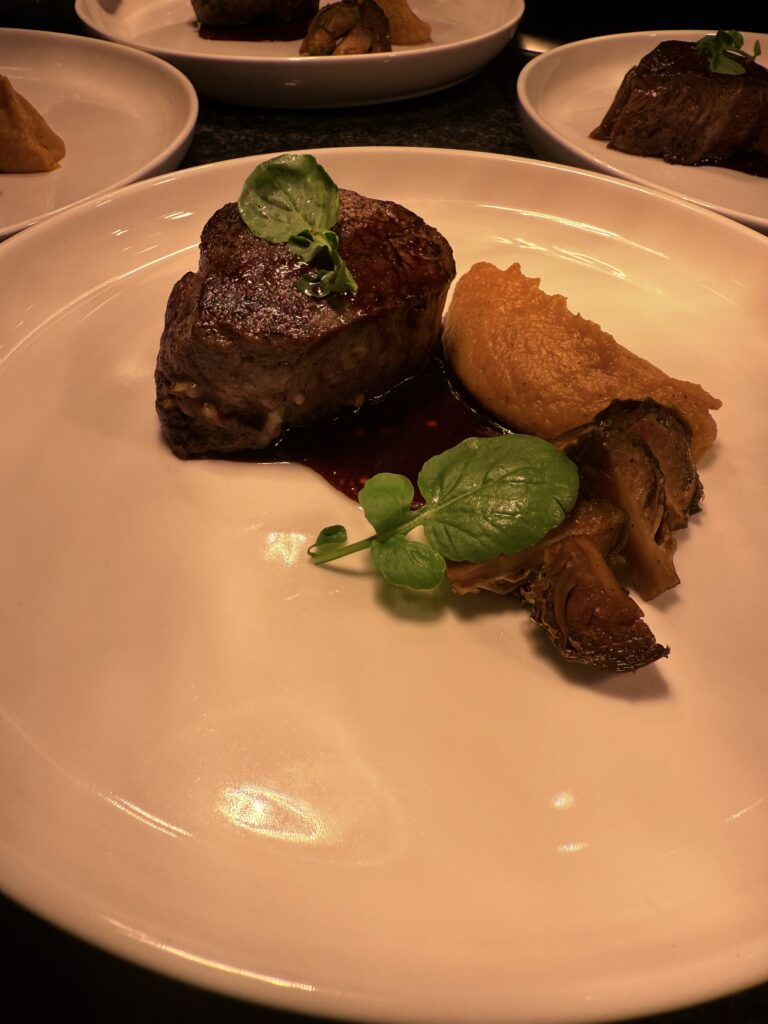
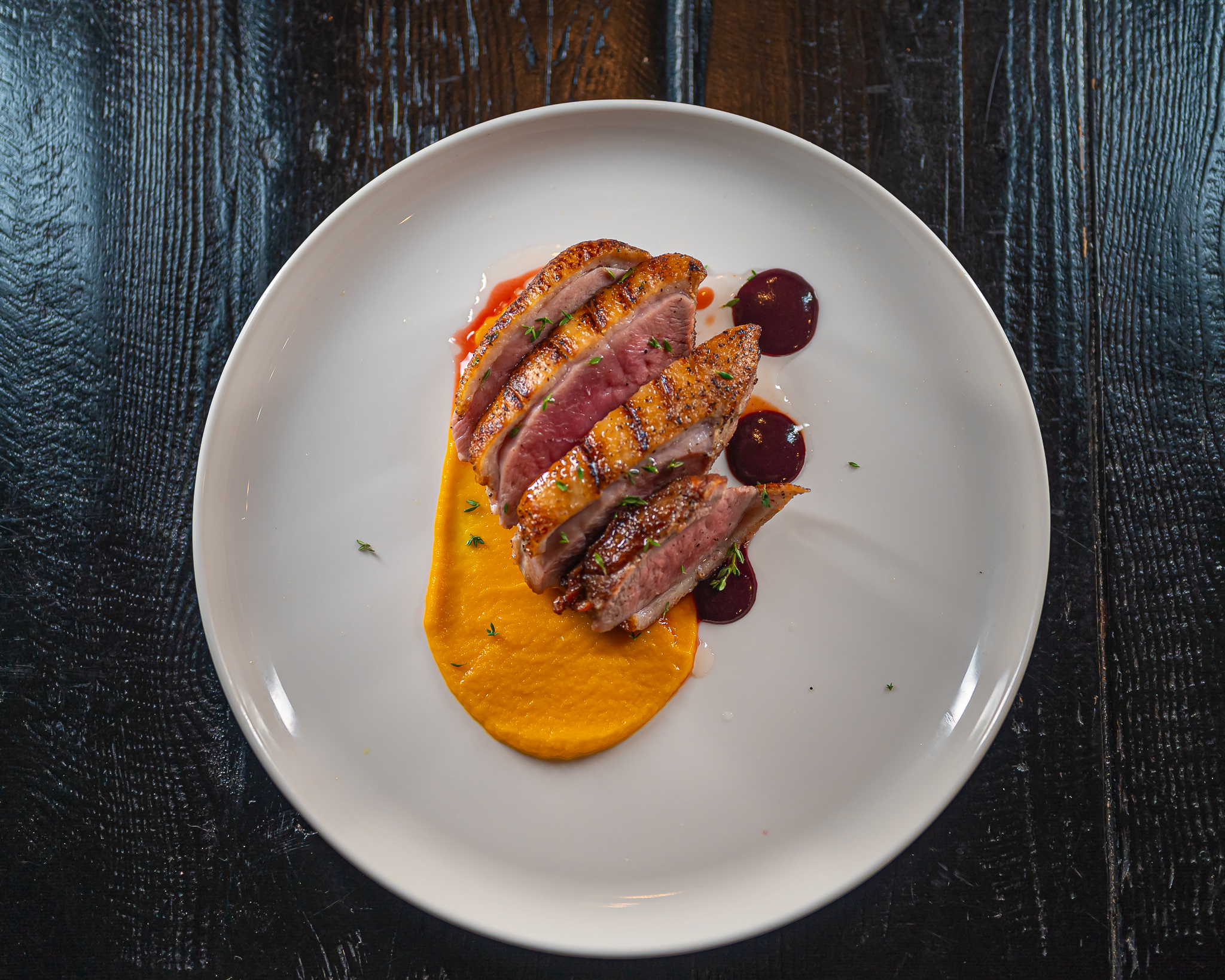
Plating: Spoon the carrot puree down first, slice the duck and fan it over the top, then spoon the cherry port wine reduction around and over. That’s the plate you see in the photo. Looks fancy, takes thirty seconds.
Wine: Pinot Noir. Don’t overthink it. Something with enough body for the duck but enough acid for the sauce. I grab an Oregon Pinot nine times out of ten.
Prep ahead: Score and season the duck 48 hours out, leave it uncovered in the fridge. You’re dry aging and prepping at the same time. Carrot puree can be made a day ahead. Sauce is best fresh but reheats okay on low.
Feeding more people: I’ve done this for two and I’ve done it for twelve. Sear the breasts in batches, hold them in a warm oven, make one big batch of sauce at the end. The carrot puree scales up easy, just roast more carrots. No drama.
Swaps: No cherries? Blackberries work. No port? A decent red wine with a spoonful of honey gets you close. The carrot puree is non-negotiable though. Don’t skip it.
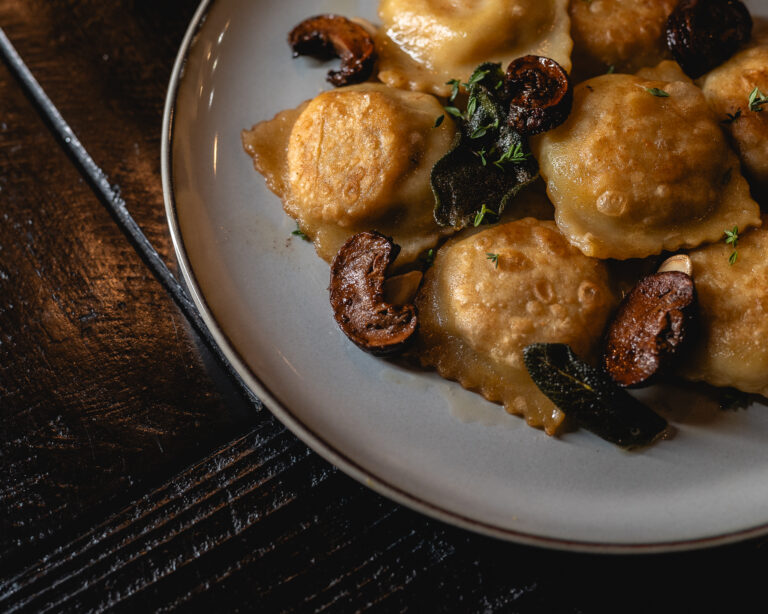
If you’ve been nervous about duck, this is where you start. This duck breast with cherry port wine sauce has converted more skeptics at my table than any other dish I make. I’ve served it at intimate anniversary dinners and full scale Partum Events productions for twelve, and it lands every single time. And if you’ve tried it before and it didn’t hit, 48 hour dry age, cold pan. That’s the whole game. If you’re looking for more dinner ideas, try my butternut squash ravioli or the filet mignon with apple brandy glaze.
Duck Breast with Cherry Port Wine Sauce
Ingredients
Method
- Score the skin of each duck breast in a crosshatch pattern, cutting through the fat but not into the meat.
- Season generously on both sides with salt and freshly ground black pepper.
- Place duck breasts skin-side down in a cold skillet. Set over medium heat and cook for 12 to 15 minutes, rendering the fat until the skin is deep golden and crispy.
- Flip and cook for 3 to 4 minutes for medium-rare. Add the crushed garlic and thyme sprigs in the last 2 minutes and baste with the fat.
- Transfer to a cutting board and rest for 5 minutes before slicing.
- Drain all but 1 tablespoon of duck fat from the pan. Return to medium heat.
- Add the shallots and cook for 2 minutes until softened.
- Add the cherries and cook for 2 minutes, pressing lightly to release their juice.
- Pour in the port wine and let it reduce by half, about 3 to 4 minutes.
- Add the chicken stock and balsamic vinegar. Simmer for 5 to 7 minutes until the sauce coats the back of a spoon.
- Remove from heat. Stir in the butter and honey. Season with salt and pepper.
- Preheat oven to 400°F. Toss carrots and shallots with olive oil and honey. Season with salt and white pepper.
- Spread on a baking sheet and roast for 25 to 30 minutes until tender and caramelized at the edges.
- Transfer to a blender. Add the cold butter and blend until smooth.
- With the blender running, add warm cream or stock gradually until the purée is silky and spoonable.
- Season with salt, white pepper, and a pinch of nutmeg.
Notes
Filed Under: Equipment
Shop This Recipe

Lodge 12″ Cast Iron Skillet
Check Price →
ThermoWorks ThermoPop 2
Check Price →
WÜSTHOF Classic 8″ Chef’s Knife
Check Price →
All-Clad D3 Sauce Pan, 2 Qt
Check Price →As an Amazon Associate I earn from qualifying purchases.