Ingredients
Method
Sear the Duck Breast
- Dry-brine and dry-age (48 hours ahead): score the skin in a crosshatch pattern about 1 cm apart, cutting through the fat but not into the meat. Stop when you feel resistance — you are scoring fat only, never the flesh. Season generously with salt and pepper. Lay the breasts uncovered on a wire rack set over a plate. Refrigerate 48 hours. The salt pulls moisture and the surface dries completely so the skin shatters when seared.
- Place duck breasts skin-side down in a cold skillet. Set over medium heat and cook for 12 to 15 minutes, rendering the fat until the skin is deep golden and crispy.
- Flip and cook for 3 to 4 minutes for medium-rare. Add the crushed garlic and thyme sprigs in the last 2 minutes and baste with the fat.
- Transfer to a cutting board and rest for 6 minutes before slicing.
Why Dry-Age: Moisture is the enemy of crisp skin. A 48-hour rest uncovered in the fridge draws it out of the surface. Cook on a wet skin and you steam the fat instead of rendering it.
Starting in a cold pan is intentional. It gives the fat time to render out slowly before the skin makes contact with a hot surface. You will hear it pop and crackle. Do not touch it.
Make the Cherry Port Wine Sauce
- Drain all but 1 tablespoon of duck fat from the pan. Return to medium heat.
- Add the shallots and cook for 2 minutes until softened.
- Add the cherries and cook for 2 minutes, pressing lightly to release their juice.
- Pour in the port wine and let it reduce by half, about 3 to 4 minutes.
- Add the chicken stock and balsamic vinegar. Simmer for 5 to 7 minutes until the sauce coats the back of a spoon.
- Remove from heat. Stir in the butter and honey. Season with salt and pepper.
The port will smell sharply acidic as it reduces. That is normal. Keep the heat at medium and let it work. The acidity softens completely once the stock goes in.
Make the Roasted Carrot Puree
- Preheat oven to 400°F. Toss carrots and shallots with olive oil and honey. Season with salt and white pepper.
- Spread on a baking sheet and roast for 25 to 30 minutes until tender and caramelized at the edges.
- Transfer to a blender. Add the cold butter and blend until smooth.
- With the blender running, add warm cream or stock gradually until the purée is silky and spoonable.
- Season with salt, white pepper, and a pinch of nutmeg.
Cold butter blended into a warm puree creates an emulsion that gives you that glossy, restaurant-quality finish. Warm butter will break it.
Notes
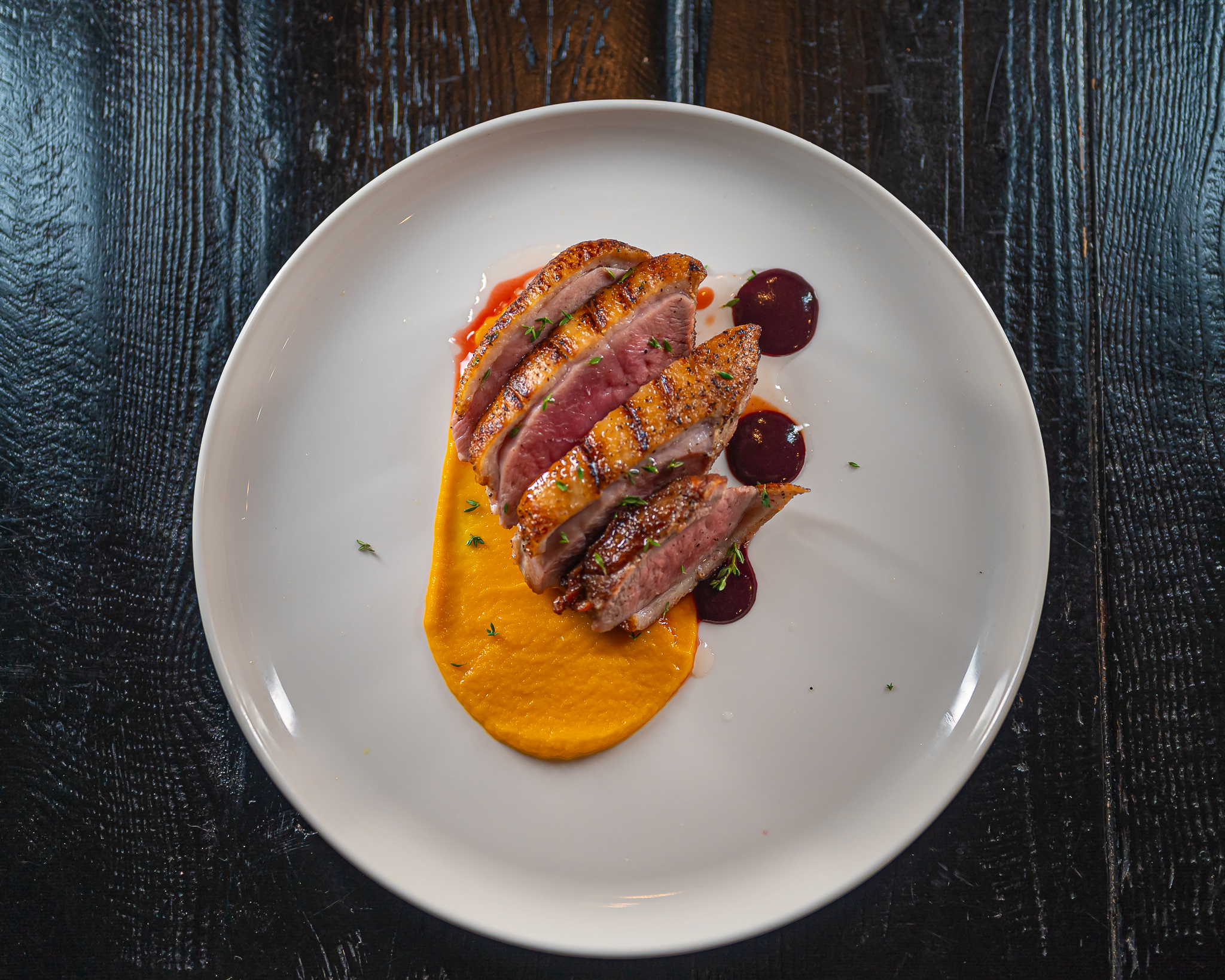
Plating: Rest duck skin-up 6 minutes, slice across the grain into five pieces per breast. Carrot puree swiped across the plate with the back of the spoon. Duck shingled against the puree at 4 o'clock, skin angled up toward the diner. Cherry port sauce spooned around the duck, not over (the skin has to stay crisp). Thyme leaves pulled at the pass.
Wine pairing: Oregon Pinot Noir.
The duck can be scored and dry aged 48 hours ahead. Carrot puree can be made a day ahead and reheated on low with a splash of cream.
Scaling for service: To 2: halve the duck (use 2 breasts) and halve the sauce ingredients. Keep the carrot puree at full quantity — it reheats well and leftovers are better than under-portioning. To 8: double the duck, but only 1.75x the port reduction. A larger pot loses less moisture to evaporation so it concentrates faster. Sear skin-side in two batches, render hard, finish in a 400°F oven. To 12: triple the duck, 2.25x the reduction, three sear batches. Hold sliced duck in a 200°F oven uncovered, 6 minutes max before the juices pool out and the crust softens.
Dietary swaps: To make it GF: the sauce is GF as written, just confirm your chicken stock and balsamic are certified. Not easily dairy-free. The carrot puree leans on butter and cream for the silky texture, and the pan sauce is finished with butter. Swap the cream for warm stock and finish the sauce with olive oil instead of butter if you have to, but the puree goes looser and the sauce loses its gloss. Nut-free as written.