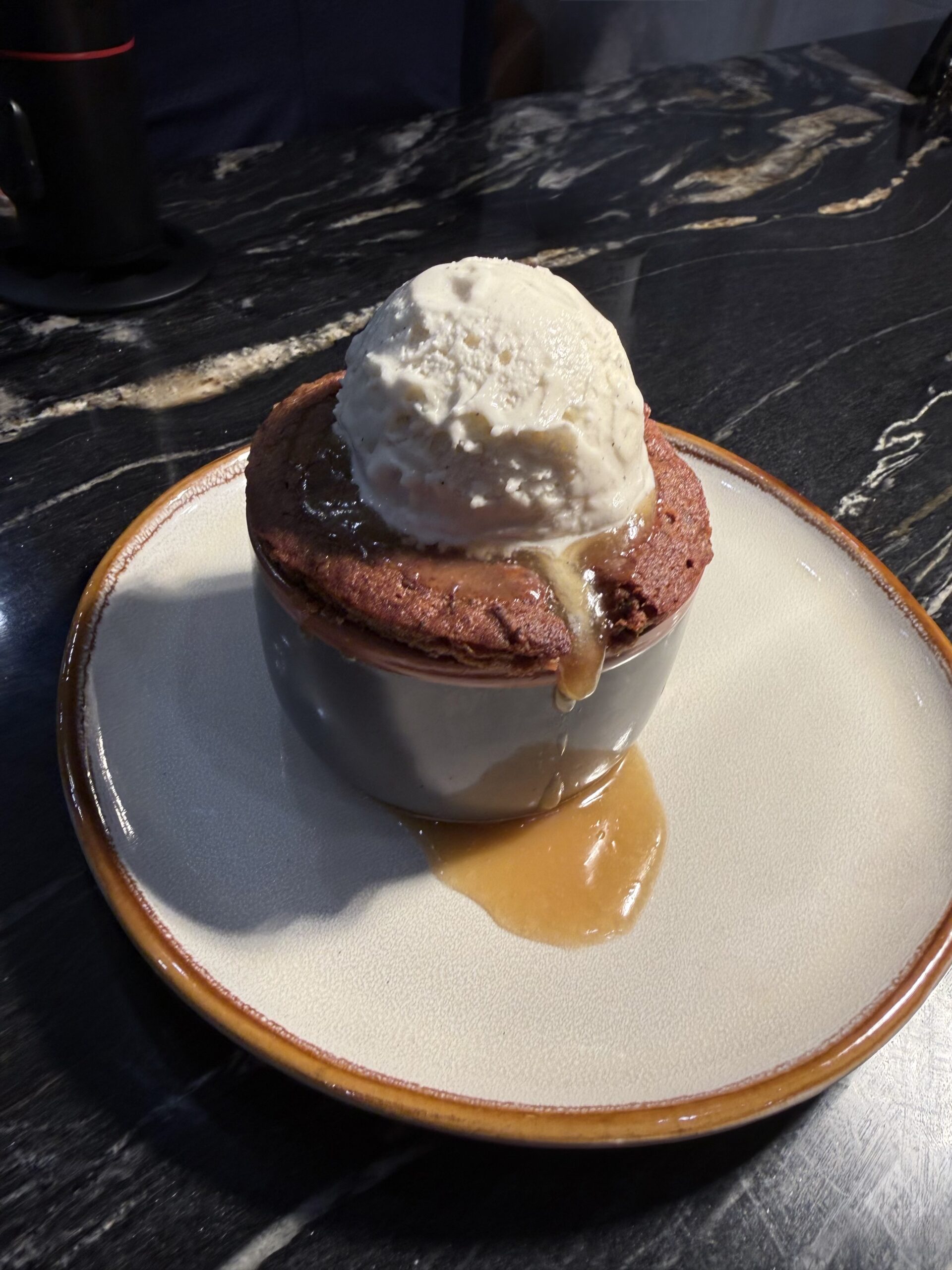
Sticky Toffee Pudding with Toffee Sauce and Homemade Vanilla Bean Gelato
This post contains affiliate links. If you purchase through them I may earn a small commission at no extra cost to you.
There are desserts that people politely enjoy, and there are desserts that stop a table. Sticky toffee pudding is the second kind. I served this at a private dinner in Newport last autumn, a small gathering where the hosts wanted something warm, deeply flavored, and a little unexpected for the finale. The moment I unmolded those ramekins and spooned the warm toffee sauce over each one, the room shifted. This sticky toffee pudding has that effect. It is a date sponge that is dense without being heavy, soaked in a butter and cream toffee sauce that sets into something almost glossy, finished with a cold scoop of homemade vanilla bean gelato that melts into the warmth below it. Once you understand what it is and how it works, you will want a reason to make it constantly.
Why Sticky Toffee Pudding Is the Dessert That Always Wins
Most desserts ask for effort in proportion to how impressive they look. Sticky toffee pudding breaks that rule. The sponge comes together in one bowl, the toffee sauce takes about five minutes on the stovetop, and the whole thing bakes in individual ramekins that come out looking like something from a proper restaurant kitchen. What sells it is the combination of temperatures and textures. The pudding is warm and soft, almost yielding. The sauce is rich and just barely sweet. The gelato is cold enough to contrast both. You get three things happening at once on the spoon and it never gets old.
The secret ingredient is Medjool dates, and people are sometimes skeptical when they find out. Dates do not taste like dates once they have been softened in boiling water, combined with baking soda, and folded into the batter. They dissolve into something that makes the sponge moister than any butter cake you have ever had, and they add a depth of flavor that you would struggle to name if you did not know what went in. That is the whole trick. The dates are not the flavor of the pudding. They are the reason the pudding has the texture and richness that makes it so good.
The Story Behind the Plate
I made this for the first time professionally at a late-autumn dinner in Newport, a table of eight who had been working through a long menu. They were at that point in the evening where they were full but not quite ready to leave. The hosts had asked for something comforting, not too fussy, but with enough refinement that it felt like a proper finish to a private chef dinner. I had been thinking about this dish for a while, because sticky toffee pudding is one of those British classics that gets adapted endlessly and badly. Too sweet, too dense, sauce that is more corn syrup than anything else. I wanted to do it properly.
Individual ramekins were the right call for that table. Each person got their own pudding, their own sauce, their own scoop of vanilla bean gelato placed right before service so it had just barely started to melt. It looked intentional and personal in a way that a shared dish does not. When I work with Partum Events, that kind of individual plating matters. It tells the guests they are being taken care of specifically, not just fed well generally. That dinner is why this recipe is on the files.
The Date Sponge: What Makes It Work
The batter for this pudding is not complicated, but the date preparation step is not optional and cannot be rushed. Chop the Medjool dates, place them in a bowl with boiling water and baking soda, and leave them for a full ten minutes. The baking soda breaks down the cell structure of the dates as they soften, which is what makes them so easy to fold into the batter without lumps. After ten minutes, mash them lightly with a fork. You are not making a puree, you just want them rough and soft, still with some texture. That texture carries through into the final sponge.
The rest of the batter is straightforward: cream the butter and brown sugar until pale, add the egg and vanilla, fold in the flour mixture, then stir in the date mixture until just combined. Do not overmix once the flour goes in. You will see a batter that looks slightly curdled when the dates go in because of the moisture difference. Keep folding gently and it comes together. Divide it evenly between four buttered six-ounce ramekins.
Twenty to twenty-five minutes at 350 degrees F. The puddings are done when a toothpick comes out clean and the tops are just set and springy. Pull them out and let them sit for two to three minutes before unmolding. They will release cleanly from a well-greased ramekin.
The Toffee Sauce: Simple but Unforgiving
The sauce is five ingredients: brown sugar, heavy cream, butter, vanilla, and a pinch of salt. All of them go into a small saucepan at the same time. Bring it to a simmer, stirring, then cook for three to four minutes until it thickens slightly and coats the back of a spoon. That is it. The unforgiving part is temperature control. If the heat is too high and the sauce splits, you end up with a greasy, grainy mess. Medium heat. Steady simmer. Do not walk away from it.
The sauce should be poured warm, not hot, over the puddings at service. If you made it ahead and it has cooled and thickened, reheat gently over low heat with a splash of cream to loosen it back up. It will hold in the fridge for three or four days without any issue. In a private dinner setting, I make the sauce in the afternoon, refrigerate it, and reheat it to order while the puddings are in the oven. It works every time.
Salt is not optional. A pinch of salt in a toffee sauce is what separates something that tastes one-dimensional from something that you keep going back to. The salt does not make it taste salty. It makes the sweetness taste intentional.
The Vanilla Bean Gelato
Making the gelato from scratch changes the whole dessert. The richness of a proper custard-based vanilla bean gelato against the warm sticky toffee pudding is not the same as opening a pint from the freezer. It does not have to be the same, and there are nights where a good store-bought vanilla is exactly right. But when you have time and the dinner warrants it, this is the version to make.
The gelato is a custard base. Whole milk, heavy cream, egg yolks, sugar, and a vanilla bean. Steep the vanilla in the warm milk and cream for at least fifteen minutes before you start the custard. That steeping is what gives the gelato depth. You are not just adding vanilla flavor, you are building it into every part of the base. If you are using vanilla bean paste instead of a pod, stir it into the warm milk and let it sit the same way.
Tempering the egg yolks is the step people worry about and it is the step that sounds harder than it is. Ladle the hot milk into the yolks slowly, a little at a time, while whisking constantly. You are warming the yolks gradually so they do not scramble when they hit the heat. Once the yolk mixture goes back into the pan, keep the heat at medium-low and stir constantly. The custard is done when it coats the back of a spoon and holds a clean line when you drag your finger through it. Pull it from the heat immediately.
Chill the custard completely before churning. Four hours minimum, overnight is better. The gelato needs to be cold all the way through before it goes into the machine. Churned too warm it will not set up properly and the texture will be icy rather than creamy. You need an ice cream maker for this. This recipe is written specifically for the Cuisinart ICE-21P1. Once churned, the gelato will have a soft, scoopable texture. It goes straight from the machine onto the warm pudding at service.
Baking in Individual Ramekins
The ramekin approach is worth committing to over a baking dish for a few reasons. Each portion bakes evenly because the heat surrounds a small vessel rather than trying to penetrate a deep pan from the outside in. The individual puddings unmold as a self-contained unit with a defined shape, which makes plating cleaner and more deliberate. And in a dinner party setting, plating individual desserts means service is fast and consistent because every plate looks the same.
Six-ounce ramekins are the right size. Bigger and the puddings take too long and the center risks staying gummy. Smaller and you lose the ratio of sponge to sauce. Grease them well, including the rim, and dust lightly with flour if you want extra insurance on the release. Run a small knife around the inside edge before inverting onto the plate.
If you are making this ahead, the baked puddings can sit in the ramekins for up to an hour before service. Reheat them by placing the ramekins in a baking dish with an inch of hot water, covered with foil, in a 300 degree F oven for ten to twelve minutes. They come out as good as they did fresh.
How to Plate
Run a small offset spatula or paring knife around the inside edge of each ramekin. Invert the pudding onto a warmed plate, flat side down. Hold the ramekin in place for a few seconds and lift. If it sticks, tap the bottom once. The pudding should drop cleanly.
Spoon the warm toffee sauce directly over the top of the pudding and let it run down the sides. Use enough sauce that it pools slightly on the plate. This is not the moment for restraint. Place a generous scoop of vanilla bean gelato to the side of the pudding, slightly touching it so it begins to pick up the color of the sauce. The contrast of the dark, glossy pudding against the white gelato is the visual. Serve immediately. The gelato should be melting by the time it reaches the table.
No garnish needed. A single sprig of thyme or a few flakes of sea salt on the gelato is fine if you want something, but the dish does not need it. The toffee sauce is the finish.
Chef’s Notes
Plating. Invert the warm pudding onto a warmed plate. Sauce goes over the top, pooling on the plate. Gelato placed to the side, touching the pudding, so it melts into the sauce at the edge. Serve the moment the plate leaves your hands.
Wine pairing. A Sauternes or late-harvest Riesling works well here. The sweetness of the wine echoes the toffee sauce without competing with it, and the acidity cuts through the richness of the sponge. A Pedro Ximenez sherry is another strong option if you want something heavier.
Prep ahead. The toffee sauce can be made up to 4 days ahead and refrigerated. Reheat over low heat with a splash of cream. The unbaked batter can rest at room temperature for up to 2 hours before baking. The baked puddings can be kept in their ramekins and reheated in a water bath at 300 degrees F for 10 to 12 minutes before service. The gelato custard can be made the day before and churned the morning of the dinner.
Feeding more people. The recipe doubles and triples cleanly. Batter and gelato ratios stay the same. Bake time does not change because you are still using individual ramekins. Make one large batch of toffee sauce regardless of how many puddings you are serving.
Swaps. Brown sugar in the sponge can be swapped for muscovado if you want a deeper, more bitter molasses flavor. Heavy cream can replace some of the sauce butter for a slightly thinner sauce. If you do not have an ice cream maker, a good store-bought vanilla gelato is a perfectly acceptable substitute. Do not skip the dates or try to replace them with dried figs or prunes. The baking soda reaction is specific to dates and the texture will not be the same.
If you liked this dessert, try my pumpkin spiced cheesecake for another dessert that performs at a dinner party, or follow a rich main with my filet mignon with apple brandy glaze and let this pudding be the finish the table deserves. For a full private dinner menu built around an autumn evening, the peach bourbon pork tenderloin makes a strong second course before this lands.
Sticky Toffee Pudding with Toffee Sauce and Homemade Vanilla Bean Gelato
Ingredients
Equipment
Method
- Preheat oven to 350 degrees F. Grease four 6-ounce ramekins well, including the rim.
- Combine the chopped dates, boiling water, and baking soda in a bowl. Let stand for 10 minutes to fully soften. Mash lightly with a fork.
- In a separate bowl, whisk together the flour, baking powder, and salt.
- Cream the butter and brown sugar together until pale and light, about 2 minutes.
- Add the egg and vanilla extract. Mix until fully combined.
- Fold in the flour mixture until just incorporated. Do not overmix.
- Stir in the date mixture until the batter comes together smoothly. Divide evenly between the four prepared ramekins.
- Bake for 20 to 25 minutes, until a toothpick inserted in the center comes out clean and the tops are springy. Let rest 2 to 3 minutes before unmolding.
- Combine the brown sugar, heavy cream, butter, vanilla, and salt in a small saucepan. Bring to a steady simmer over medium heat, stirring.
- Cook for 3 to 4 minutes, stirring occasionally, until the sauce thickens and coats the back of a spoon.
- Combine the whole milk and heavy cream in a medium saucepan. Split the vanilla bean lengthwise and scrape the seeds. Add both the seeds and the pod to the pan. Heat over medium until just about to boil, then remove from heat and steep for 15 to 20 minutes.
- Whisk the egg yolks, granulated sugar, and salt in a bowl until pale and slightly thickened.
- Slowly ladle about 1/2 cup of the warm milk mixture into the egg yolks, whisking constantly. Pour the tempered yolk mixture back into the saucepan, whisking continuously.
- Cook over medium-low heat, stirring constantly, until the custard thickens enough to coat the back of a spoon and reaches 170 to 175 degrees F. Do not let it boil.
- Remove the vanilla bean pod. Strain the custard through a fine-mesh sieve into a clean bowl. Press plastic wrap directly onto the surface. Cool to room temperature, then refrigerate at least 4 hours or overnight.
- Churn the chilled custard in an ice cream maker according to manufacturer instructions until the gelato has a soft, creamy texture.
- Run a small knife around the inside edge of each ramekin. Invert onto a warmed plate. Tap the bottom once if it sticks.
- Spoon warm toffee sauce generously over each pudding, letting it pool on the plate.
- Place a scoop of vanilla bean gelato alongside the pudding and serve immediately.
Notes
Filed Under: Equipment
Shop This Recipe

Mora 6oz Ceramic Ramekins, Set of 6
Check Price →
Cuisinart Ice Cream Maker, 1.5 Qt
Check Price →
All-Clad D3 Sauce Pan, 2 Qt
Check Price →
OXO 3-Piece Strainer Set
Check Price →As an Amazon Associate I earn from qualifying purchases.