
Chimichurri Sauce
This chimichurri sauce gets requested at every single event I do. Not occasionally. Every time. I started making it for a rehearsal dinner in Newport three years ago and it has appeared on my menus for corporate dinners in Providence, private lunches in Middletown, and more backyard parties on Aquidneck Island than I can count. It is one of those recipes that sounds simple and tastes like you have a background in it. The depth comes from a few specific choices that separate this chimichurri sauce from the versions you might find in a jar at the grocery store. Once you make it this way, you will understand why it travels so well from event to event. This is a sauce that makes people stop mid-bite and ask what is in it.
The Sauce That Shows Up Everywhere
The rehearsal dinner where this started was at a waterfront home on the east side of Newport. A family had rented the property for the weekend and wanted a full Friday night dinner for thirty people before a Saturday ceremony at a local venue. Building the menu around a whole roasted tenderloin meant I needed a sauce that could anchor the platter without demanding too much attention. Tenderloin was the star. Something bright and herbaceous was the support act.
I had been experimenting with chimichurri variations for a while by then. The classic Argentine version is coarsely chopped herbs, lots of garlic, red wine vinegar, red pepper flakes, and olive oil. It is excellent and traditional and there is absolutely nothing wrong with it. But for a plated event, I kept coming back to the same problem. The chunky version does not cling to protein the way a slightly smoother sauce does. When someone cuts into a tenderloin and you spoon the sauce over it, you want it to coat the meat rather than sit alongside it. That texture distinction matters more than most people realize.
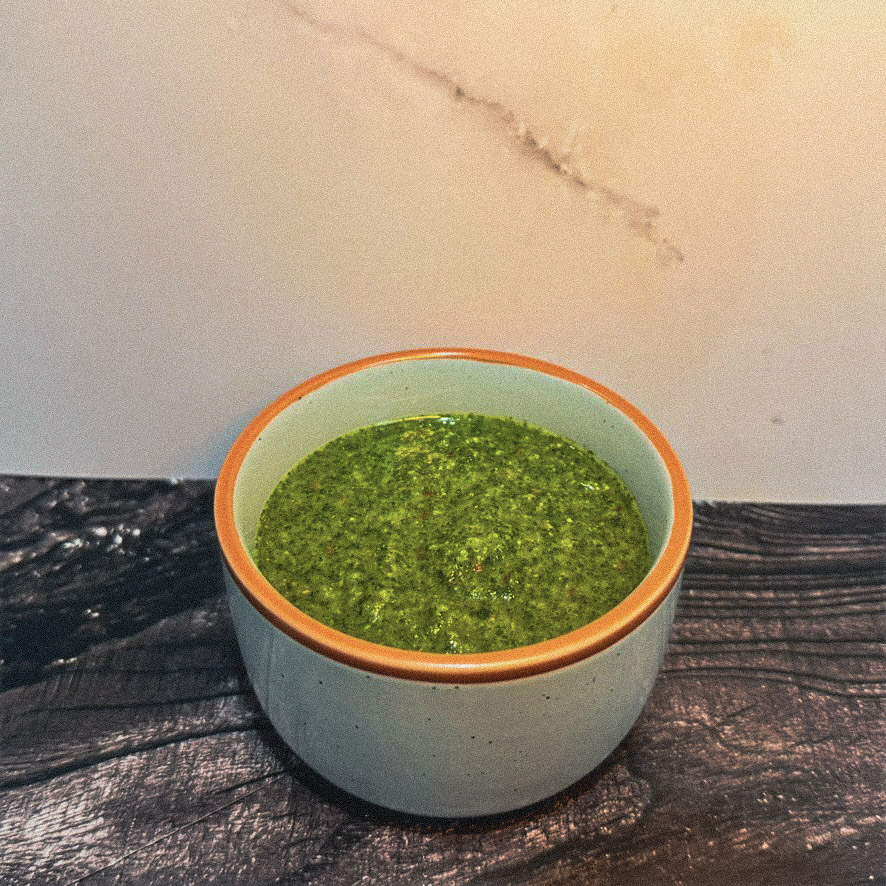
So I blended it. Not completely smooth, but smooth enough that it emulsified into something with body and gloss. I added shallot instead of raw garlic alone, which rounds out the bite considerably. I used lime juice alongside the red wine vinegar, which brightens the whole sauce by about ten percent in a way that is hard to describe but instantly noticeable. And I leaned into cilantro as a supporting herb alongside the parsley rather than keeping it all parsley.
The Reaction
The reaction at that rehearsal dinner told me I had landed something. The sauce was gone before the tenderloin was fully carved. I had to go back to my prep station and make another batch from what I had left in my kit. The mother of the groom stopped me in the kitchen and asked if she could buy a jar to take home. That does not happen with a sauce that is merely good.
Since then it has become my default green sauce for anything that needs brightness. Steak, obviously. But also fish, chicken, vegetables, eggs, bread, and a few combinations I will describe in detail below. The recipe is flexible in the best way. You can push it spicier, make it more herb-forward, thin it out for a vinaigrette, or thicken it for a dipping sauce. The bones are reliable enough that variations work without breaking the formula.
For the full story of how I approach private event menus, the Partum Events blog has a detailed walkthrough of a recent micro wedding dinner that shows how sauces like this fit into the broader flow of a private event menu.
Why This Chimichurri Sauce Is Different From the Classic
The traditional chimichurri sauce from Argentina is beautiful in its simplicity. Flat-leaf parsley chopped fine by hand, raw garlic, red wine vinegar, dried oregano, red pepper flakes, olive oil. It is bold and acidic and deeply herbal. Served alongside grilled asado, it is exactly right. But cooking for private events in New England, I have learned that classic is a starting point, not a ceiling.
Here is what I changed and why each change matters.
Lime juice alongside red wine vinegar. The classic uses only red wine vinegar, which gives a sharp, slightly tannic acid hit. Lime juice adds a citrus brightness that the vinegar cannot replicate. The lime note reads as fresh and alive in a way that vinegar alone does not. The ratio I use is roughly two parts vinegar to one part lime juice. If you flip those proportions the lime becomes dominant and you lose the earthier backbone the vinegar provides. This balance is specific and worth following exactly until you know the sauce well enough to adjust by feel.
Shallot instead of raw garlic alone. Raw garlic in a sauce that sits for any length of time can become harsh and overpowering. Shallot provides an allium note that is more rounded, slightly sweet, and less aggressive on the palate. I use one medium shallot in addition to one small clove of garlic. The garlic is still there but the shallot moderates it. For guests who are sensitive to strong garlic flavors, this adjustment makes the sauce approachable without neutering it.
The Herb Combination
Cilantro as a supporting herb. Parsley is the base. It provides the grassy, clean herb backbone that every chimichurri sauce needs. Cilantro adds a citrus-adjacent brightness and a slightly floral note that works beautifully with the lime juice. The two herbs together create something more complex than parsley alone. For guests who have the genetic sensitivity to cilantro and find it soapy, the recipe works with all parsley. It is a different sauce but still an excellent one. If you use all parsley I recommend adding a small handful of fresh mint to approximate the brightness cilantro provides.
Fresh oregano instead of dried. This is the detail that gets skipped most often and it is one of the most important. Dried oregano has a concentrated, almost medicinal quality that can tip a sauce toward something that tastes like pizza seasoning. Fresh oregano is milder, slightly floral, and integrates with the other herbs rather than announcing itself separately. I use about a tablespoon of fresh oregano leaves, stripped from the stem. If fresh oregano is genuinely unavailable, use a small pinch of dried. Small. A half teaspoon maximum. Dried oregano is roughly three times more concentrated than fresh and it will take over if you are not careful.
The Method
Blending for emulsification. This is the biggest structural departure from the classic and the one that changes the sauce most dramatically. When you blend the herbs with the shallot and garlic first and then drizzle the olive oil in slowly while the processor is running, you create an emulsification. The oil disperses into tiny droplets throughout the sauce rather than pooling on top. The result has a glossy, cohesive texture that clings to food rather than running off it. This is the same principle behind making a vinaigrette by emulsifying rather than simply combining. It changes the mouthfeel completely. The sauce becomes something you want to spoon over everything rather than something that requires constant stirring to redistribute before serving.
Red pepper flakes behavior in blending. In a hand-chopped chimichurri, the pepper flakes remain whole or in large pieces and deliver intermittent heat. When blended, even briefly, the flakes break down and the heat distributes more evenly throughout the sauce. This means the spice level is consistent in every bite rather than concentrated in certain mouthfuls. For a more uniform, polished result, blending works better. For a more rustic, variable experience, keep the flakes whole and add them after blending the herbs. Both approaches are valid depending on the context.
What to Put Chimichurri Sauce On
The short answer is: most things. The longer answer is more useful.
Steak. This is the canonical application and for good reason. The acidity in the chimichurri cuts through the fat in the beef in a way that makes the whole bite feel lighter and brighter than it is. For cut selection, skirt steak and flank steak are the traditional choices. The loose grain of both cuts absorbs the sauce beautifully when sliced thin against the grain and laid over a pool of chimichurri on the platter. Ribeye works exceptionally well if you want something more indulgent. The marbling in a ribeye provides enough fat content that the sauce has plenty to work against. New York strip is clean and lean and slightly more restrained with chimichurri but still excellent. The key with any of these cuts is to slice them and let them rest for a moment before spooning the sauce over. The residual heat from the meat warms the chimichurri slightly and opens up the herb aromas in a way that spooning cold sauce over hot protein fresh from the pan does not.
Fish and Poultry
Fish. Swordfish is my first choice. The meaty texture and mild flavor of swordfish handles the boldness of chimichurri without being overwhelmed by it. Grilled swordfish with a generous spoonful of this sauce is one of my go-to summer menus at waterfront events. Mahi mahi is excellent for the same reason. Salmon works if you have a lighter hand with the sauce. The fat in salmon can compete with the olive oil in the chimichurri and the combination can become heavy if you are not careful. For a leaner, cleaner result, striped bass or halibut with chimichurri is exceptional. The white flesh, minimal fat, and clean flavor of both fish let the herb sauce be the primary flavor driver.
Chicken. The spatchcock method is my preference when using chimichurri on chicken for a group. Removing the backbone and pressing the bird flat gives you even cooking and a large surface area that takes on whatever you put over it. Grill or roast until the skin is crisp, rest for ten minutes, then carve and spoon chimichurri over the pieces as they go to the platter. The herbs against crispy chicken skin is one of those textural combinations that works on every level. For individual portions, bone-in skin-on thighs are the most forgiving and practical option. The extra fat content in the thigh means even if the cook is slightly uneven, the result is still juicy.
Beyond the Grill
Eggs. This is the use that surprises people most and converts them immediately. Soft scrambled eggs on toast with a small spoonful of chimichurri sauce on top is a genuinely excellent breakfast. The acidity and herb brightness wake up the richness of the eggs in the same way they cut through steak fat. Over easy eggs on a piece of toast, broken so the yolk runs, chimichurri on top. Add some flaky salt and that is it. If you do a weekend brunch for any number of people, put chimichurri sauce in a small bowl on the table next to the eggs and watch how quickly it disappears.
Roasted vegetables. Caramelization is the key word here. Raw or lightly cooked vegetables do not have the depth to stand up to chimichurri. But properly roasted vegetables, where the natural sugars have developed and the edges have color, pair beautifully with the sauce. Cauliflower roasted at high heat until the florets are deeply browned. Carrots with some char on the edges. Sweet potatoes with caramelized cut surfaces. All of these have a sweetness that the vinegar and herbs in the chimichurri balance perfectly. Toss with a little olive oil and roast at 425 degrees until genuinely browned, not just cooked through. The Maillard reaction on the vegetable surface is what creates the flavor contrast that makes the pairing work.
Bread, Cheese, and Grains
Crusty bread. Use it as a dipping sauce. Treat it like an herb oil. Drizzle it over sliced sourdough with a bit of good salt. Simple and entirely worth doing.
Burrata. For a composed starter at a dinner party, this is hard to beat. Place a whole burrata on a plate. Spoon chimichurri sauce generously over and around it. Add a slice or two of grilled bread alongside. Finish with flaky salt and a light drizzle of olive oil. The combination of the cool, creamy interior of the burrata against the bright, acidic herb sauce is one of the most elegant starters you can put together in under five minutes. It photographs beautifully, which matters if you are hosting people who document their meals. It also tastes genuinely impressive, which matters more.
Grain bowls and legumes. Chimichurri sauce over a bowl of farro or white beans with some roasted vegetables is a complete weeknight meal that takes almost no effort once the sauce is made. The sauce brings enough acid and herb complexity to make a simple grain base feel substantial and interesting. Chickpeas roasted in olive oil until crispy and served over farro with chimichurri is a weeknight dinner that could serve at a casual dinner party without apology.
Chef’s Notes
Plating: When plating chimichurri sauce at private events, spoon it directly over the protein right before service. Do not pass it separately unless it is on a sharing platter or family-style board. The vivid green over a rested steak or a piece of grilled fish tells the story immediately and visually. It communicates freshness and care. For family-style service, use a small ceramic bowl with a wooden spoon placed directly on the platter so guests can add as much as they want. Color is everything with this sauce. It should look like it was just made because it essentially was. Do not let it sit in a warm kitchen for hours before serving or the green will dull. Make it fresh or make it the day before and keep it cold.
Wine pairing: Malbec from Mendoza is the classic partner for chimichurri sauce on steak. The grape and the sauce come from the same culinary tradition and they understand each other. The dark fruit in the Malbec complements the herbal brightness of the chimichurri without fighting it. Torrontés from Argentina is an interesting alternative if you want something white and aromatic. It has a floral, slightly exotic quality that works surprisingly well alongside the herbs. For fish with chimichurri, go to Albariño or Sancerre. Both have the acidity and minerality to match the sauce and neither will be overwhelmed by the herb flavors. The consistent principle is that this sauce needs acidity to match it. Heavy, oaky wines fight with chimichurri. Stay crisp and the pairing resolves cleanly.
Practical Notes
Prep ahead: Chimichurri sauce is actually better after a twenty to thirty minute rest, once the acids have had time to slightly soften the raw herb edges and the flavors have integrated. You can make it up to two days ahead, store it in an airtight container, and press a thin layer of olive oil against the surface before sealing to prevent oxidation. Pull it out of the refrigerator thirty minutes before you plan to serve it. Cold chimichurri mutes the herb aromas. Room temperature is where it comes alive. Do not freeze it. The cell structure of fresh herbs breaks down at freezer temperatures and the texture becomes unpleasant when thawed.
Feeding more people: This recipe makes approximately one quarter cup, enough for four portions as a protein topping. Double it freely for six to eight people. For a dinner party of eight, triple the batch. For larger events, make in separate batches rather than scaling up further than triple in a single food processor run. When you overload the processor with too much volume, the blending becomes uneven and the texture suffers. Two or three batches blended separately and combined in a bowl produces a more consistent result than one enormous batch. At events I make batches of triple recipe and keep them in small containers in the cooler, pulling out fresh portions as needed throughout service.
Swaps and Customization
Swaps: If cilantro is genuinely not an option, use all parsley and add a small handful of fresh mint. No fresh oregano available? A pinch of dried works but keep the amount conservative. Dried herbs are concentrated and will overpower the fresh ones if used too generously. The lime juice is important and I would encourage you not to skip it. It is not merely decorative acidity. It changes the brightness of the whole sauce in a way that red wine vinegar alone does not replicate. Red pepper flakes are fully adjustable to your heat preference. Start with a small amount and taste before adding more. The heat level blooms as the sauce rests.
Make a batch of this chimichurri sauce on Sunday and you will find uses for it all week. It transforms a simple weeknight steak into something worth sitting down for. A piece of grilled fish becomes restaurant-quality with almost no additional effort. It does something beautiful to eggs on a Saturday morning. If you want to see this same approach applied to a full plated dinner, the filet mignon with apple brandy glaze uses a similar philosophy of a bold sauce anchoring a classic protein. The duck breast with cherry port wine reduction is another example of getting the sauce-to-protein ratio exactly right. And if you want something lighter that still has that same brightness and acidity, the mahi mahi coconut curry takes a completely different direction but shares the same commitment to a sauce that makes the whole dish. These are the kinds of recipes I cook at Partum Events and the same approach I bring to every dish on this site.
Chimichurri Sauce
Ingredients
Method
- Add parsley, cilantro, oregano, shallot, garlic, red wine vinegar, lime juice, red pepper flakes, and salt to a blender.
- Blend on low to combine, then slowly stream in the olive oil while blending until the sauce is smooth and emulsified. Do not over-blend.
- Taste and adjust salt, acid, and heat. Let rest 20 to 30 minutes before serving to allow the flavors to develop.
Notes
Filed Under: Equipment
Shop This Recipe


As an Amazon Associate I earn from qualifying purchases.