Butternut Squash Ricotta Ravioli with Sage Brown Butter Sauce
There is a dish I have made more times than I can count for private events, and every single time it lands on the table, the room goes quiet for a second. That is what butternut squash ricotta ravioli does to people. Not the kind from a store bag. I mean hand-rolled pasta, a filling that smells like fall in New England, and a sage brown butter sauce so simple it feels almost unfair. I started making this at dinner events in Newport years ago, and it has never left my rotation. Some recipes come and go. This one stays.
Why butternut squash ricotta ravioli Is Worth Every Minute
I know pasta from scratch sounds like a weekend project. It does take time. But here is what nobody tells you: the actual active work is probably forty-five minutes. The rest is resting time for the dough, which means you can roast the squash, make the filling, and pour yourself a glass of wine while the pasta relaxes on the counter. This is not complicated cooking. It is patient cooking, and when you sit down to a plate of butternut squash ricotta ravioli you made yourself, the payoff is enormous.
The other thing is texture. Fresh pasta has a tenderness that dried pasta cannot replicate, and with ravioli specifically, you feel it in every bite. The filling stays silky because it is sealed inside pasta that gives instead of resists. Brown butter and crispy sage on top and you have something that tastes genuinely special, the kind of dish guests ask about afterward.
You do not need a pasta machine to make this. A rolling pin and a little muscle gets you there. I have made this recipe in fully equipped professional kitchens and in vacation rental spaces with nothing but a cutting board and a borrowed pan. The technique scales to whatever tools you have.
One more thing worth saying: the combination of butternut squash, ricotta, nutmeg, and cinnamon is a northern Italian classic, most common around the Mantua region where sweet-savory pasta fillings have been made for centuries. What I do is keep it grounded. No added sweetness. Just the natural sweetness of roasted squash, balanced by parmesan and a solid amount of salt and pepper. That balance is what makes it work as a savory dinner course rather than something that belongs at the dessert table.
The Story Behind the Plate
Fall in Newport has a particular energy. The summer crowds thin out, the light gets lower and longer, and people start asking for meals that feel more grounding. I was cooking a private dinner for a group of ten at a waterfront property in mid-October. The client had reached out through Partum Events a few weeks earlier and said something I hear often from people who hire a private chef. She said: “I want people to feel taken care of.”
That phrase tells me everything. It means the food should be familiar enough to be comforting but interesting enough to feel special. It means the experience matters as much as the plate. And in October in New England, it almost always means something with squash.
The butternut squash came from a farm stand off Route 138, the kind that operates out of a converted barn and takes cash only. When butternut squash is at its peak in New England, it is dense and sweet in a way that supermarket squash does not quite hit. I bought more than I needed, which is always the right call. I roasted it a little longer than most recipes suggest, until the edges picked up real color. That caramelization deepens the flavor and cuts through the richness of the ricotta. It is the step most home cooks rush, and it is where the dish lives or dies.
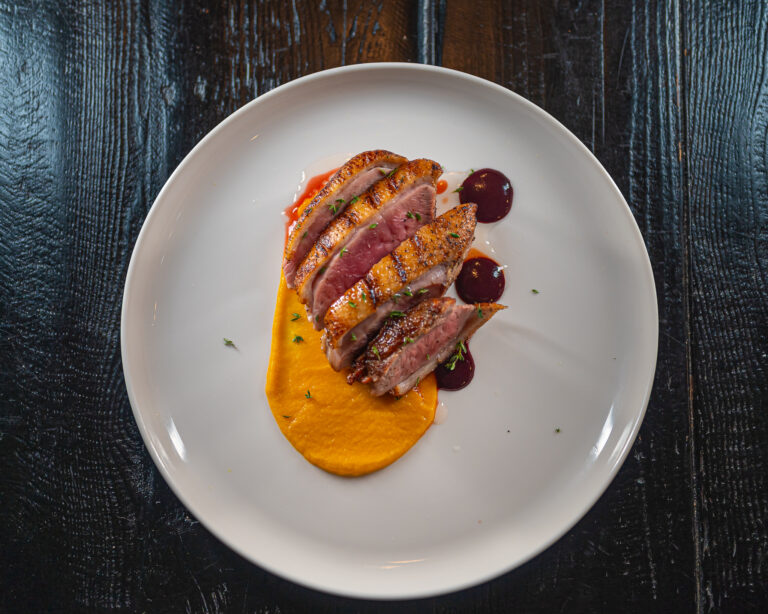
The dinner table was set outside under propane heaters and string lights. We served the ravioli as a pasta course before duck breast with cherry port wine sauce. When the ravioli hit the table, someone at the far end said “oh” out loud before she even tasted it. That is the response I cook for. Not applause. Just that small involuntary sound of recognition.
Making the Pasta Dough from Scratch
The foundation of any good butternut squash ricotta ravioli is the pasta dough, and that dough is a three-ingredient recipe: flour, eggs, salt. Some people add olive oil for a more pliable dough, and I do when making this for a larger group or in a dry environment where the dough tends to crack. For a home kitchen in fall, the olive oil is optional but welcome.
Make a mound of flour on a clean work surface and create a well in the center. Crack the eggs into the well with the salt. Use a fork to beat the eggs, gradually dragging flour in from the edges of the well. Once the mixture is shaggy and starting to hold, set the fork aside and use your hands. Bring the dough together and start kneading on a lightly floured surface.
Knead for eight to ten minutes. The dough needs to go from rough and sticky to smooth and elastic. You are developing the gluten structure that will let the dough stretch without tearing when you roll it thin enough to hold filling. If the dough sticks to your hands, add flour a pinch at a time. If it cracks or feels dry, wet your hands lightly and keep working.
When the dough is ready it should feel like smooth leather. Wrap it tightly in plastic wrap and let it rest at room temperature for at least thirty minutes. Do not skip this. The gluten needs to relax, otherwise the dough snaps back every time you try to roll it and tears when you fold it around the filling. Thirty minutes minimum. An hour is better if you have the time.
After resting, divide the dough into two portions. Work with one at a time and keep the other covered. Roll out on a well-floured surface to about a sixteenth of an inch thick. You want to see the outline of your hand through it slightly, but not so thin that it tears when you lift it. If you have a pasta machine, start at the widest setting and work down to setting five or six.
The Butternut Squash and Ricotta Filling
The filling is where the work pays off. Roast the butternut squash at 400 degrees Fahrenheit, cubed and spread in a single layer on a sheet pan. Single layer matters. If the cubes are piled on top of each other they steam instead of roast and you lose the caramelization that makes the filling complex. Toss with olive oil, salt, and pepper and roast for 25 to 30 minutes until tender and taking on color at the edges.
While the squash roasts, soften finely chopped onion in a skillet over medium heat, about five minutes until translucent. Add minced garlic and cook another minute or two. The onion and garlic add depth to the filling without announcing themselves, which is exactly what you want. Let everything cool before mixing.
Mash the roasted squash in a large bowl. Not completely smooth. Leave some texture so it feels made rather than processed. Stir in the cooked onion and garlic, ricotta, parmesan, nutmeg, and cinnamon. Taste carefully. The filling should be savory with warmth from the spices. It should not taste sweet. If it leans too sweet, more salt and black pepper bring it back. The squash should be the lead flavor, not the ricotta.
The filling must be fully cooled before you assemble. Warm filling makes the pasta dough sticky and impossible to seal cleanly.
To assemble the butternut squash ricotta ravioli: cut the rolled pasta into three-inch squares. Place a level teaspoon of filling in the center of each square, no more. Overfilling is the most common mistake and causes the ravioli to burst during cooking. Wet the edges with a fingertip dipped in water. Lay a second square on top and press the edges firmly together, working any air pockets toward the edge before sealing. Crimp with a fork on all four sides. Place finished ravioli on a lightly floured surface and do not let them touch each other or they will stick and tear.
Sage Brown Butter Sauce
This sauce takes six minutes and it makes the entire dish. Brown butter is regular butter cooked past melting and past foaming, until the water evaporates and the milk solids toast to golden amber. It develops a nutty aroma that nothing else in cooking quite replicates. The first time you make it you will understand immediately why French and Italian cooks have been using it for centuries.
Use a light-colored skillet. Dark pans hide the color change and you can go from perfectly browned to burned in about forty-five seconds. Melt the butter over medium heat and let it cook, swirling occasionally. It will foam, the foam will subside, and then the solids will start to brown on the bottom of the pan. When the butter smells nutty and looks golden amber, add the sage leaves. They will sizzle and crisp in about ninety seconds. The kitchen will smell extraordinary.
Season with salt, pepper, and a squeeze of fresh lemon juice if you want brightness to cut through the richness. The lemon is optional but I almost always use it, especially when the filling is on the sweeter side.
Cook the ravioli in well-salted boiling water while the butter browns. Fresh ravioli cooks in two to four minutes, until they float to the surface and the pasta edges feel tender when pressed gently. Drain carefully and toss directly in the sage brown butter. Every piece should be coated. Serve immediately. Brown butter pasta waits for nobody and does not reheat gracefully. This dish is very different in approach from the filet mignon with apple brandy glaze, but they share the same principle: fat, acidity, and timing make the difference.
How to Plate butternut squash ricotta ravioli
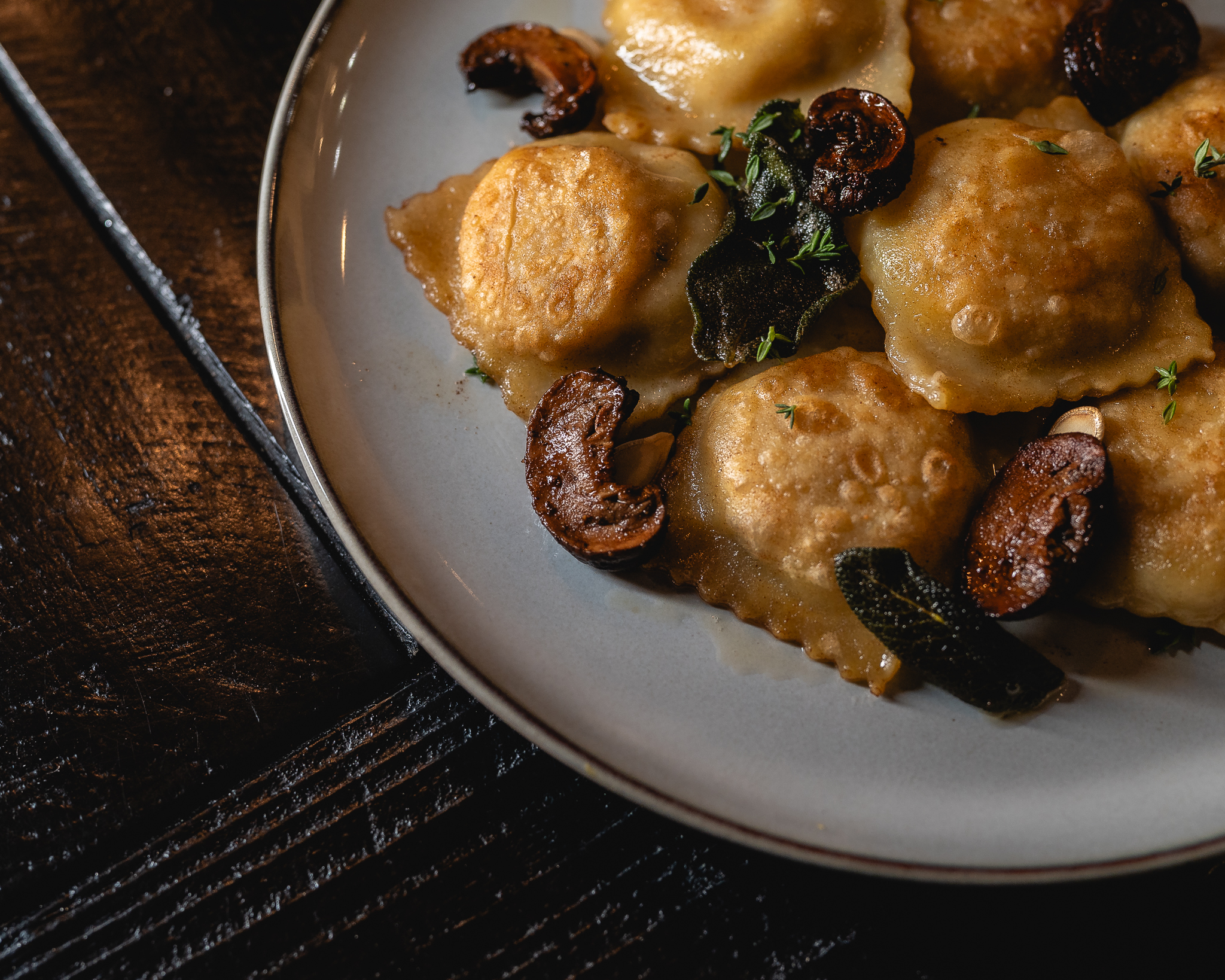
Keep it simple. This is rustic Italian cooking and the plating should match that energy. Five or six ravioli in a shallow bowl or on a warmed plate. A generous drizzle of the brown butter, making sure some of those toasted milk solids make it onto the plate. Two or three crispy sage leaves on top. Freshly grated parmesan. A crack of black pepper. That is the plate.
Warm your plates before plating. Cold dishes cool pasta down faster than you expect, and the brown butter will congeal quickly on a cold surface. Two minutes in a 200-degree oven or a quick rinse with hot water and then dried. Small detail, real difference at the table.
If you want to add something, toasted pine nuts or a few microgreens work. But this dish does not need improvement. Golden butter, green sage, pale pasta, parmesan dust. That is enough.
Chef’s Notes on butternut squash ricotta ravioli
This butternut squash ricotta ravioli holds up well for a dinner party, especially with the prep-ahead steps below. Here is everything you need to know.
Plating: Shallow pasta bowls work better than deep bowls. They let you spread the ravioli in a single layer so every piece gets coated in sauce. Warm them before plating. Two minutes in a low oven or a minute with hot tap water and then dried.
Wine: A white Burgundy or dry northern Italian white like Vermentino or Pinot Grigio pairs beautifully. You want enough acidity to cut through the butter but enough body to hold up to the richness of the filling. If you prefer red, a light Pinot Noir works without overpowering the pasta. Avoid anything tannic or heavily oaked.
Prep ahead: Make the pasta dough and the filling separately up to a day in advance and store covered in the fridge. The assembled uncooked ravioli can be frozen in a single layer on a parchment-lined sheet pan, then transferred to a freezer bag once solid. Cook directly from frozen, adding about two extra minutes.
Feeding more people: This recipe scales well. Double it for eight, triple for twelve. Make the pasta dough in separate batches rather than one large batch. Large amounts of pasta dough are harder to knead evenly and the gluten develops inconsistently.
Swaps: Acorn squash or sugar pumpkin both work in place of butternut. For a lighter filling, use part-skim ricotta. For a dairy-free version, substitute cashew cream for the ricotta and nutritional yeast for the parmesan. The texture changes slightly but the flavor profile holds.
If you are building a fuller autumn menu, the mahi mahi coconut curry with roasted root vegetables takes the same seasonal instinct in a completely different direction. Both dishes follow the same logic: let the ingredients lead, do not oversell them. That is what the files are for.
Butternut Squash Ricotta Ravioli with Sage Brown Butter
Ingredients
Method
- Preheat oven to 400°F (200°C). Toss butternut squash cubes with olive oil, salt, and pepper. Spread on a baking sheet in a single layer and roast 25-30 minutes until tender and caramelized. Let cool slightly.
- In a skillet over medium heat, sauté the chopped onion in a touch of olive oil until translucent, about 5 minutes. Add garlic and cook 1-2 minutes more.
- In a large bowl, mash the roasted squash until smooth. Fold in the cooked onion and garlic, ricotta, parmesan, nutmeg, and cinnamon. Season with salt and pepper. Set aside to cool completely.
- Mound the flour on a clean surface and make a well in the center. Crack the eggs into the well, add salt and olive oil (if using).
- Beat the eggs gently with a fork, gradually incorporating flour from the inner edges. Continue until a shaggy dough forms.
- Knead by hand for 8-10 minutes until smooth and elastic, adding a dusting of flour if sticky. Wrap in plastic and rest at room temperature for 30 minutes. This resting time is non-negotiable for tender pasta.
- Divide the rested dough into 3 portions. Using a pasta machine or rolling pin, roll each out to about 1/16-inch thickness.
- Cut rolled pasta into 3-inch squares. Place a generous teaspoon of filling in the center of half the squares. Brush edges lightly with water, lay a second square on top, and press firmly to seal. Crimp edges with a fork.
- Bring a large pot of generously salted water to a boil. Cook ravioli in batches for 2-3 minutes until they float and are cooked through. Do not overcrowd the pot.
- Meanwhile, melt butter in a large skillet over medium heat. Swirl occasionally until golden brown and nutty, 5-7 minutes. Add sage leaves and cook 1-2 minutes until crispy and fragrant. Season with salt, pepper, and a squeeze of lemon.
- Drain ravioli gently and add directly to the brown butter. Toss to coat, plate immediately, and finish with freshly grated parmesan.
- Preheat oven to 425°F if not already hot from the squash. Toss the mushrooms with olive oil, garlic, thyme, salt, and cracked pepper. Spread in a single layer on a baking sheet — no crowding or they steam instead of roast.
- Roast 18-20 minutes, shaking the pan once halfway, until deeply golden and caramelized at the edges. If using balsamic, drizzle it over the hot mushrooms as they come out of the oven and toss to coat. They can rest at room temperature until the ravioli is ready.
Notes
Filed Under: Equipment
Shop This Recipe
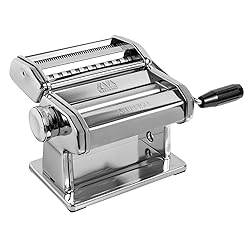
Marcato Atlas 150 Pasta Maker
Check Price →
Ravioli Cutter Stamp Set
Check Price →
Cuisinart 12-Qt Stockpot
Check Price →
OXO Spider Scoop & Strainer
Check Price →As an Amazon Associate I earn from qualifying purchases.