Ingredients
Method
Pull the Membrane and Rub the Ribs
- Pat each rack of ribs completely dry. Slide a butter knife or the rounded tip of a paring knife under the silver membrane on the bone side. Lift it, get your fingers under it with a paper towel for grip, and pull it off in one motion. Both racks.
- Whisk brown sugar, kosher salt, smoked paprika, sweet paprika, black pepper, garlic powder, onion powder, dry mustard, cumin, cayenne, and coriander in a bowl until uniform and clump-free.
- Coat each rack generously with the full half-cup of dry rub on both sides, pressing it firmly into the meat. Wrap tightly in plastic and refrigerate 8 to 24 hours.
- Pull the ribs from the fridge a full hour before they go on the smoker.
Lumpy Rub, Uneven Bark: If brown sugar is clumping, run your fingers through it on a sheet pan first. Clumps create hot spots that caramelize unevenly.
Rub Rest Isn't Optional: 8 hours minimum, 24 ideal. The salt pulls moisture and rebuilds a tacky surface that the smoke binds to.
Build the Apple Cider Glaze
- Combine apple cider, apple cider vinegar, brown sugar, honey, Dijon, Worcestershire, salt, pepper, and red pepper flakes in a small saucepan.
- Bring to a simmer over medium heat. Reduce 20 to 25 minutes until glossy and slightly thickened, the consistency of warm maple syrup. It should coat a spoon and pull a clean line when you drag a finger through it.
- Split the glaze into two bowls: two-thirds in the main bowl for smoker brushing, one-third in a separate clean bowl for the final pre-service brush. Refrigerate the clean bowl, leave the smoker-side bowl covered near the smoker.
Split the Glaze Before Brushing: The brush that touches smoker-rib surface should never touch the final platter. Two bowls keeps the food-safety line clean.
Smoke the Ribs
- Heat smoker to 225°F. Use a pellet or chunk blend of 50% apple, 30% cherry, 20% hickory. For pellet smokers specifically: 40/30/30 for stronger smoke registration. Combine spritz cider and vinegar in a spray bottle.
- Place ribs bone-side down directly on the grates. Smoke 3 hours, spritzing at the 1-hour mark and then every 45 minutes through the open-smoke stage. Resist opening the lid. Every peek adds time.
- Wrap each rack meat-side UP in butcher paper or heavy foil with about 2 tablespoons of apple cider splashed at the bone side. Return to the smoker for 2 more hours.
- Check doneness with three cues in this order: (1) probe slides between bones with no resistance, primary cue; (2) meat has pulled back from bone tips by about 1/4 inch; (3) internal temp between bones, not touching bone, reads 200 to 205°F as backstop. If resistance remains, return wrapped for 30 to 45 more minutes. Plan on 5.5 to 6.5 hours total cook time.
- Unwrap. Brush both sides liberally with the warmed main-bowl glaze (never the reserved clean bowl). Return to the smoker uncovered for 30 minutes to set the glaze into a sticky lacquer. If smoker creeps above 250°F with no spritz moisture, cap it at 235°F.
Doneness Is a Feeling, Not a Time: The probe slide is the truth on ribs. A $15 instant-read works if you don't have a leave-in probe.
Rest and Plate
- Rest the ribs 15 to 20 minutes off the heat, loosely tented, before slicing between the bones.
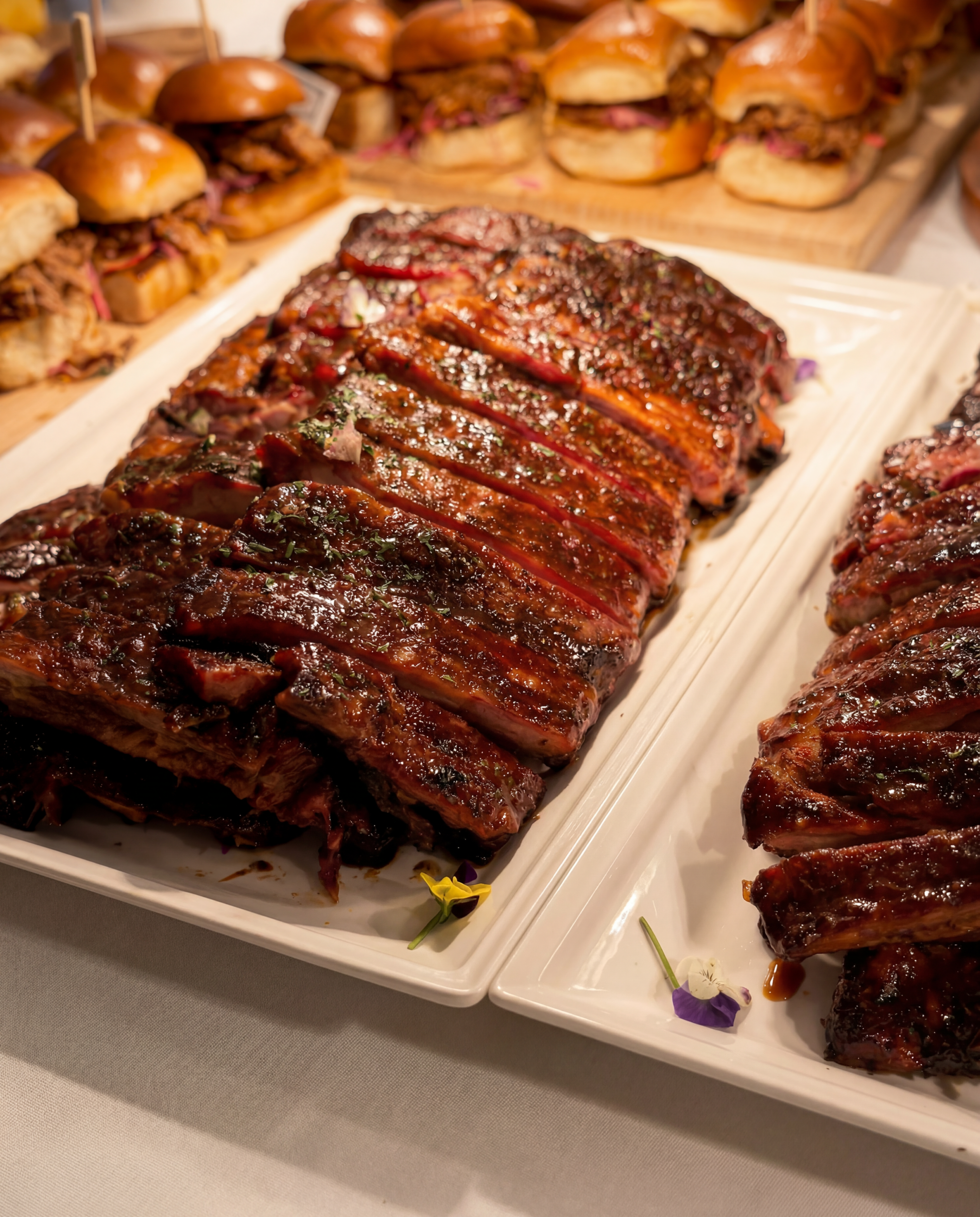
- Slice between the bones. Arrange in an overlapping fan on a long white ceramic platter, glaze-side up.
- Brush with the reserved clean-bowl glaze just before serving. Garnish with finely chopped flat-leaf parsley and a few edible flowers at the corners.
Notes
Plating: Long white ceramic platter, ribs in overlapping fan arrangement, glaze-side up. Final brush of warmed clean-bowl glaze just before service. Garnish with finely chopped flat-leaf parsley and a few edible flowers (violas, nasturtium) at the corners.
Wine: An off-dry German Riesling Kabinett. The residual sugar matches the glaze and the acid cuts the rib fat. For a red, a cooler-climate Zinfandel from Dry Creek Valley (Ridge Geyserville is the benchmark). For a lighter pour, a chilled Gamay from Beaujolais. Beer: a malty amber or a brown ale.
Prep ahead: Dry rub up to two weeks ahead, airtight. Glaze up to two days ahead, refrigerated and re-warmed. Ribs rubbed the day before smoking, minimum 8 hours, ideally 24.
Scaling for service: Each rack serves 2-3. To 8: three racks, 1.5x rub and glaze. To 20: seven racks. Most 22-inch pellet smokers hold three flat. Batch by three and stagger starts by 90 minutes. Hold finished racks wrapped at 170°F for a maximum of 2 hours before texture fails (meat continues cooking past done temp). For longer holds up to 4 hours, drop oven to 150-160°F. Glaze reduction does not scale linearly: 5x in a 4-quart pan takes 35-40 minutes, not 20. Use a wider shallower pan. Cut to order, pre-cut racks lose 30 percent glaze gloss within 15 minutes.
Swaps: Baby backs cook an hour faster. Spareribs add an hour to the wrap stage. Peach or pecan as apple wood substitutes, never mesquite. Foil works if you don't have butcher paper, bark softens slightly but meat goes more tender.